 EN
 FR
 ES
 DE

Contour: Loop Logic
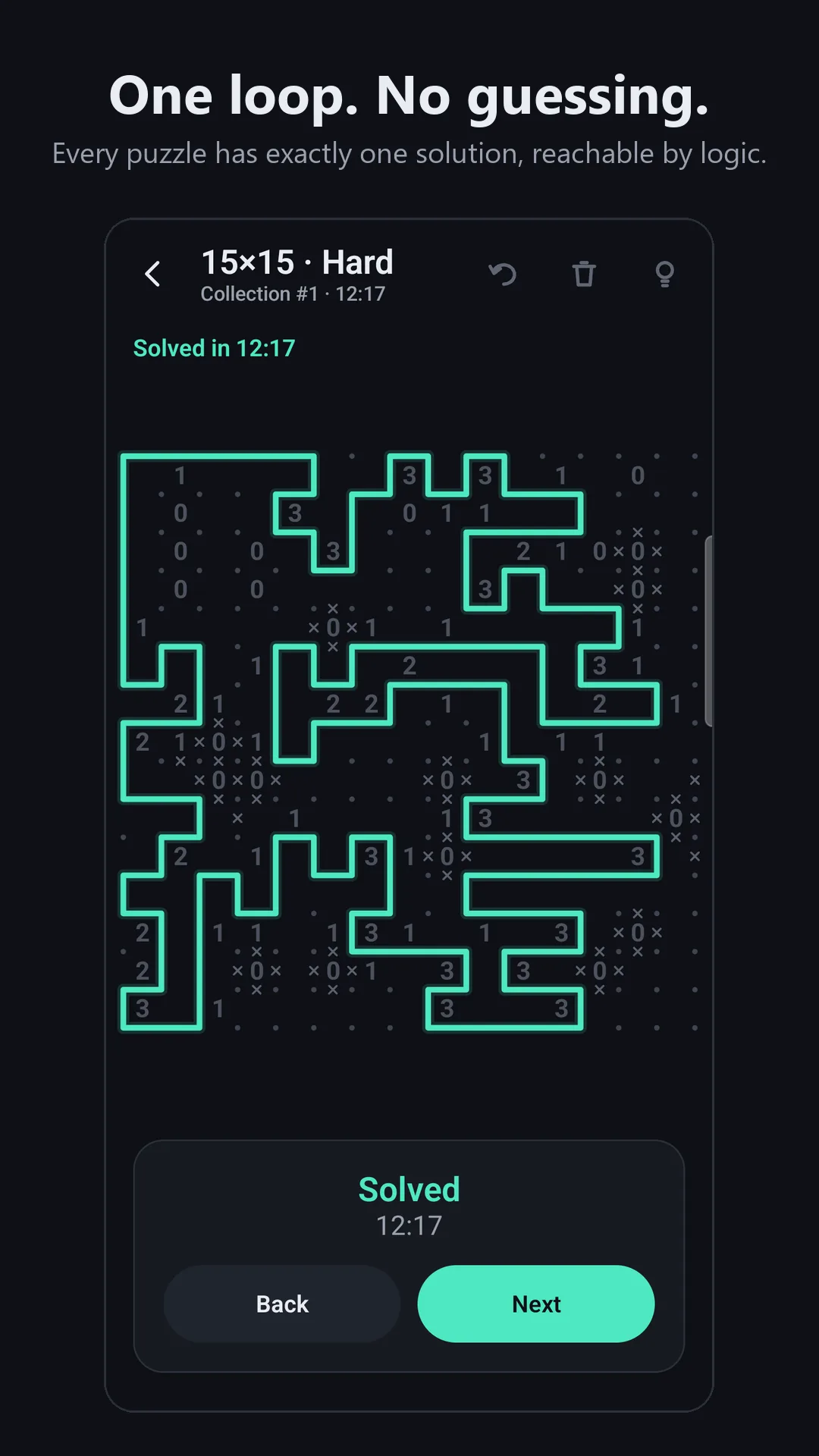
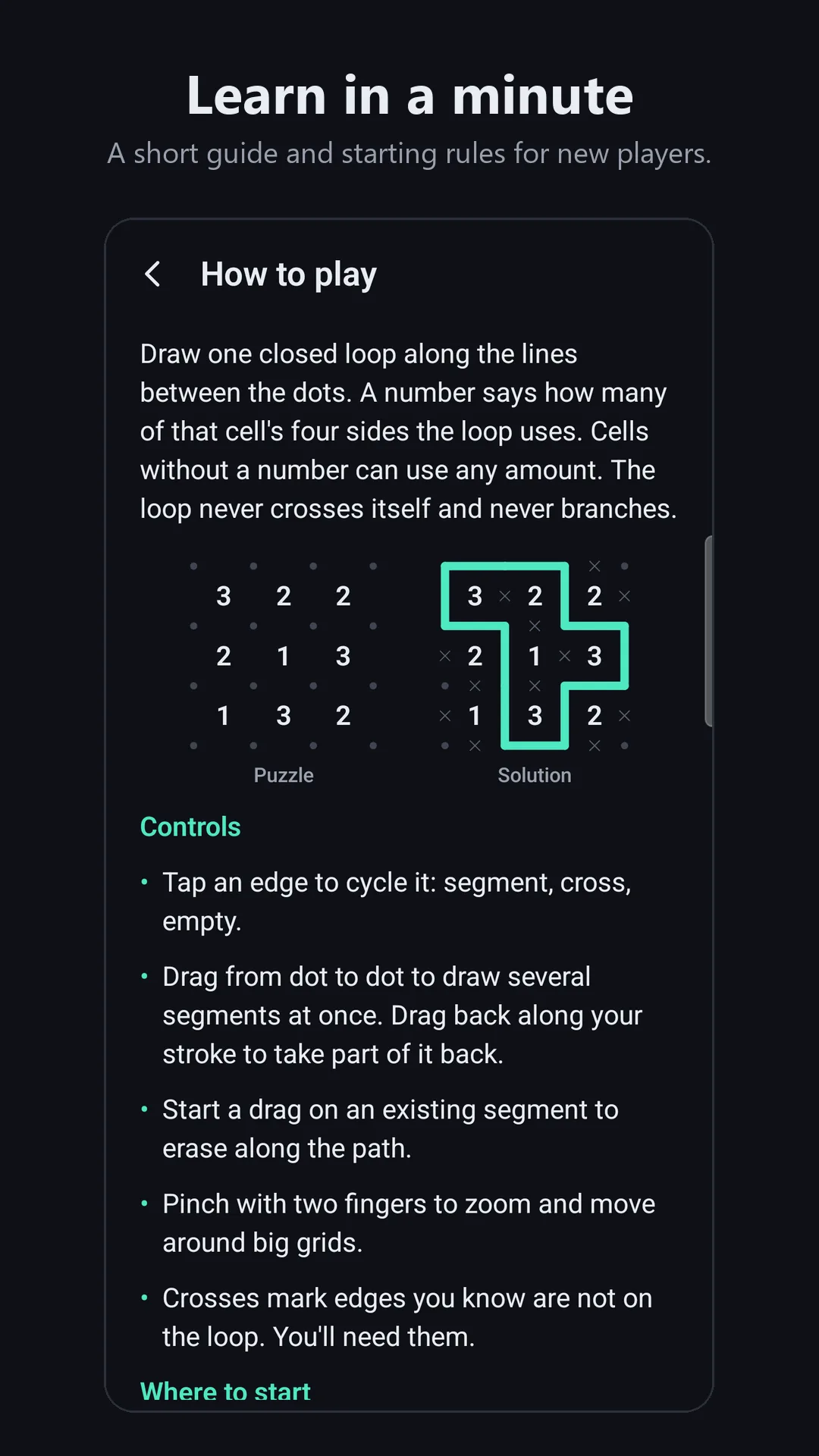
Contour gives you a grid of dots and a scattering of numbers. Draw one closed loop along the lines between the dots. Each number tells you how many of its cell's four sides the loop uses; empty cells can use any amount. The loop never crosses itself and never branches. That is all of the rules — and from them come puzzles that reward patient, step-by-step deduction. The genre is best known as Slitherlink.
One loop, one answer
Every puzzle has exactly one solution, and every one can be reached by logic — no trial and error required. A 0 tells you none of its four edges are used, a 3 in a corner tells you two of them must be, and those small certainties spread across the grid until the whole loop appears.
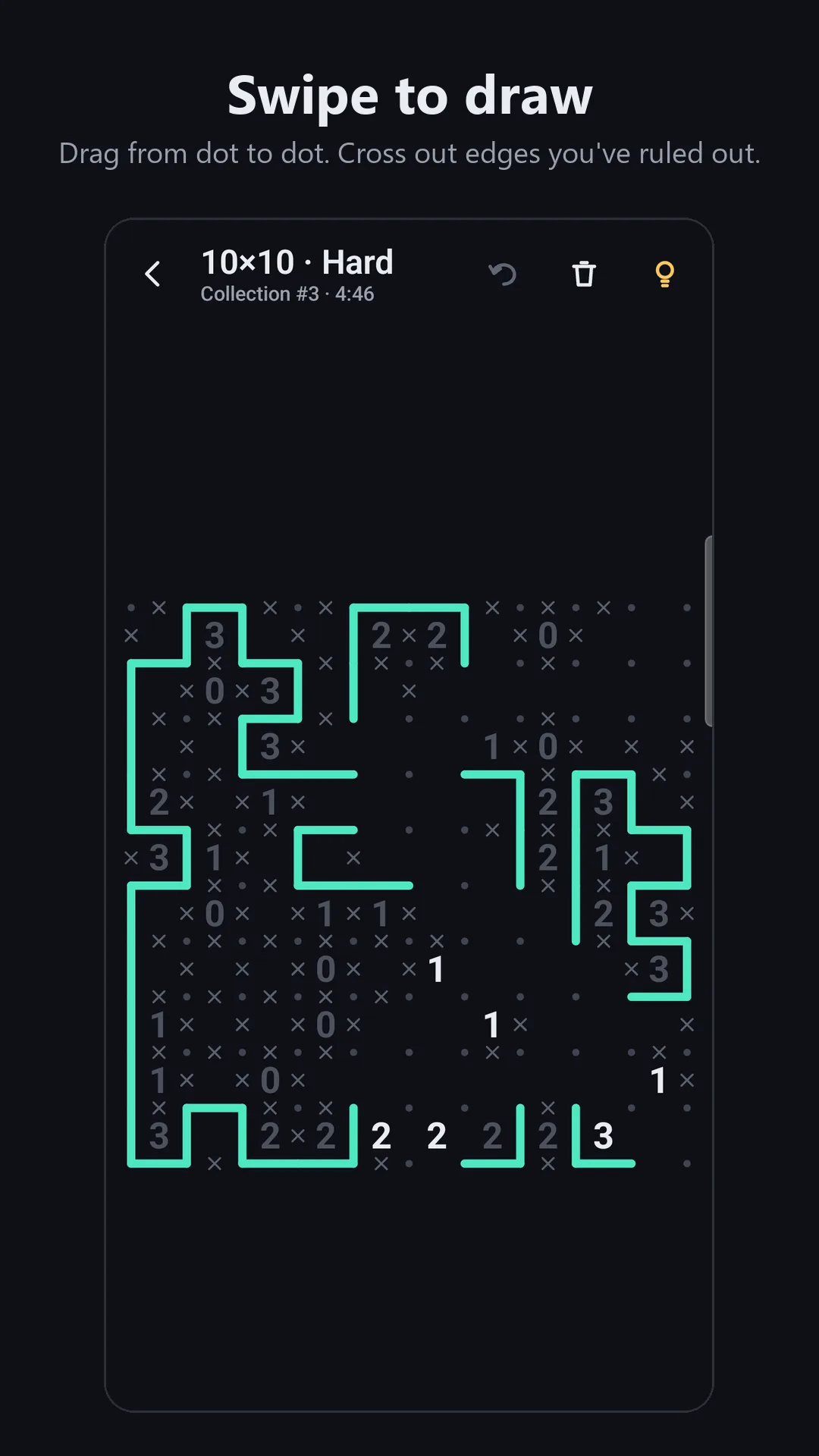
Crosses are as useful as lines. Marking an edge you have ruled out is often what unlocks the next step, so the game treats a cross as a first-class move rather than an afterthought.
Drawing that feels natural
- Tap an edge to cycle it: line, cross, empty.
- Drag from dot to dot to draw several segments in one stroke; drag back along your stroke to take part of it back.
- Start a drag on an existing line to erase along the path.
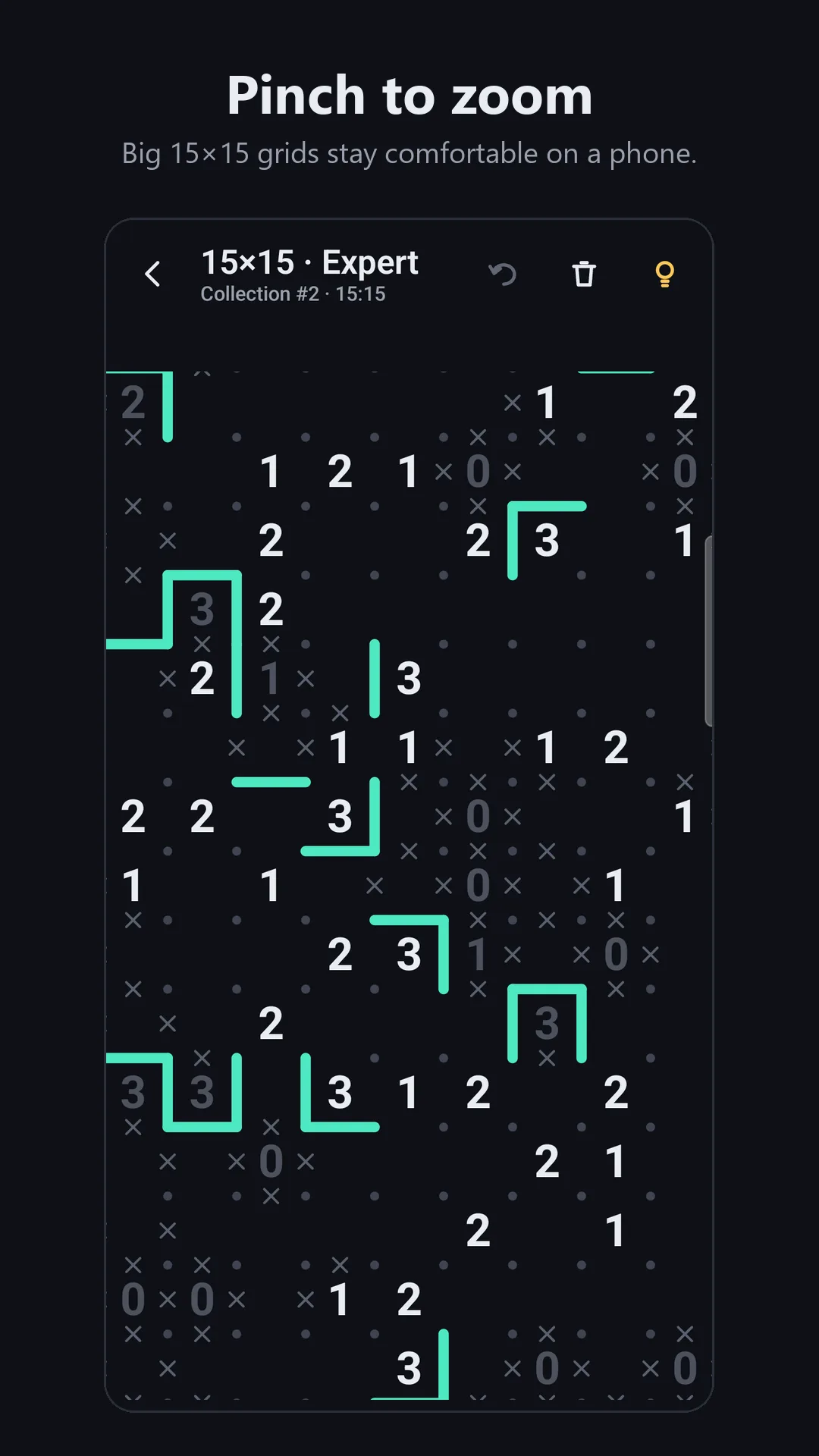
- Pinch to zoom on big 15×15 grids, and move around with two fingers.
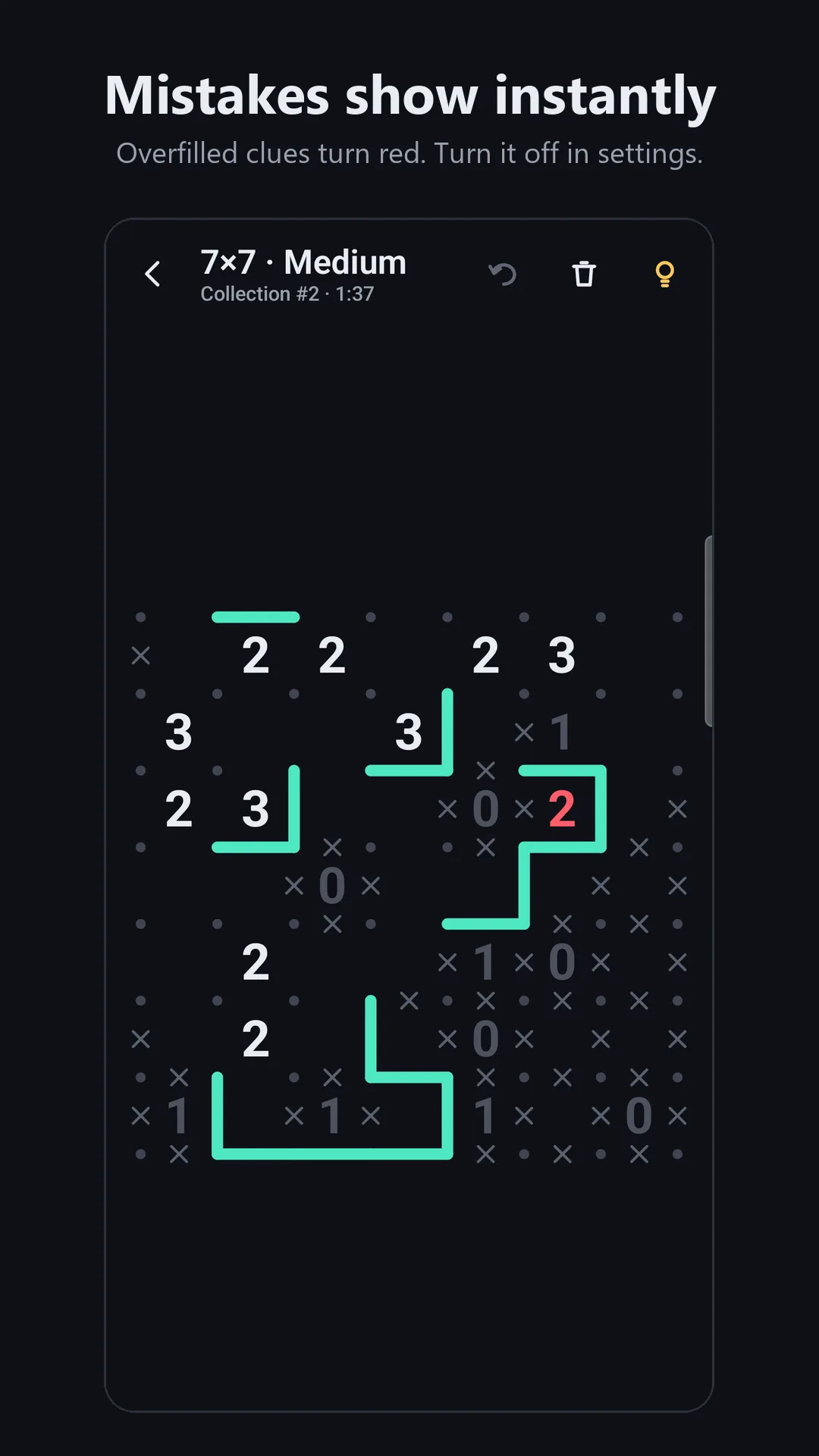
Undo, clear and a hint button sit at the top of the board. An optional setting turns overfilled clues red the moment a number has too many lines around it.
What there is to play
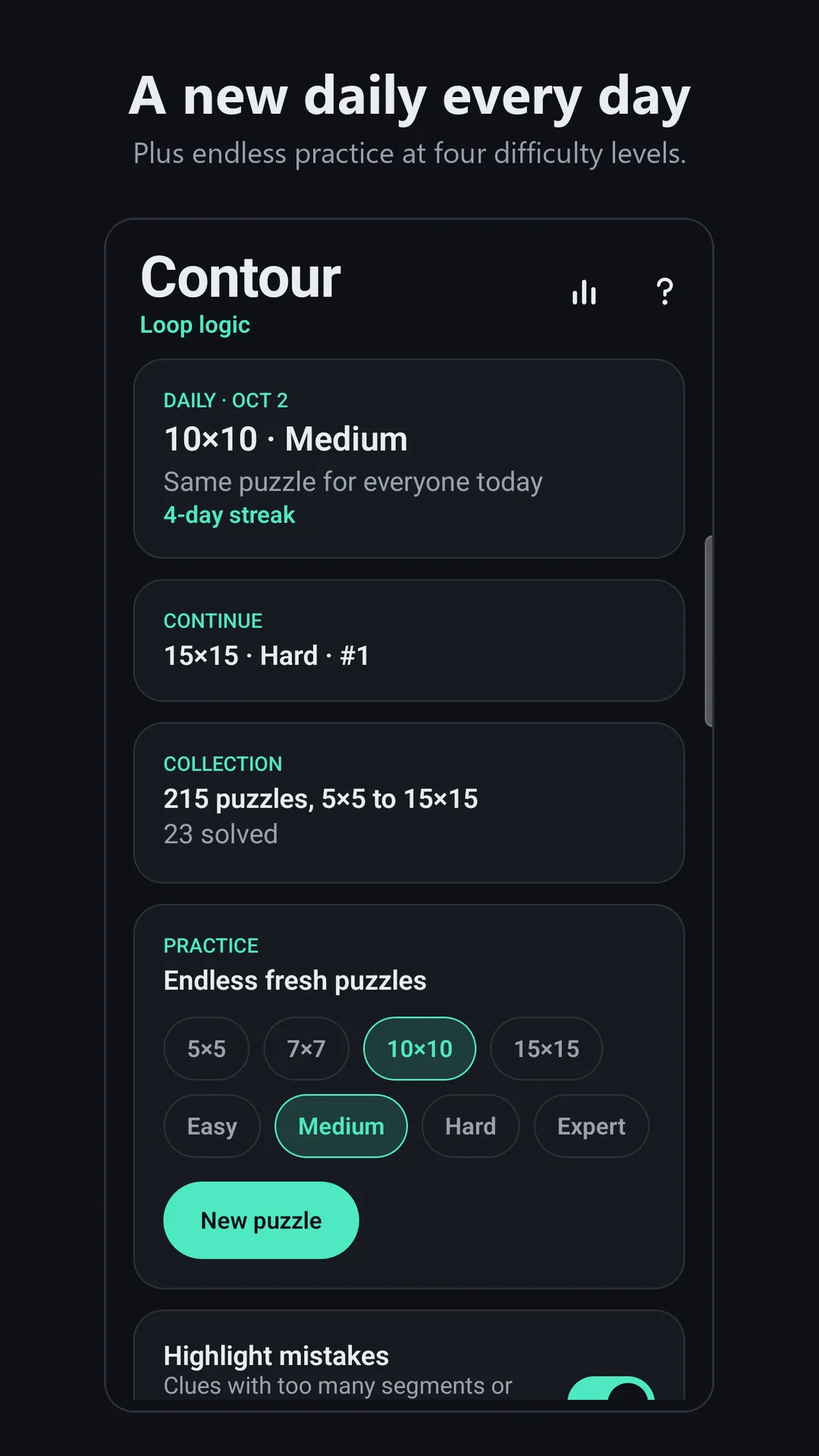
- Daily — one puzzle a day, the same for everyone, with a streak.
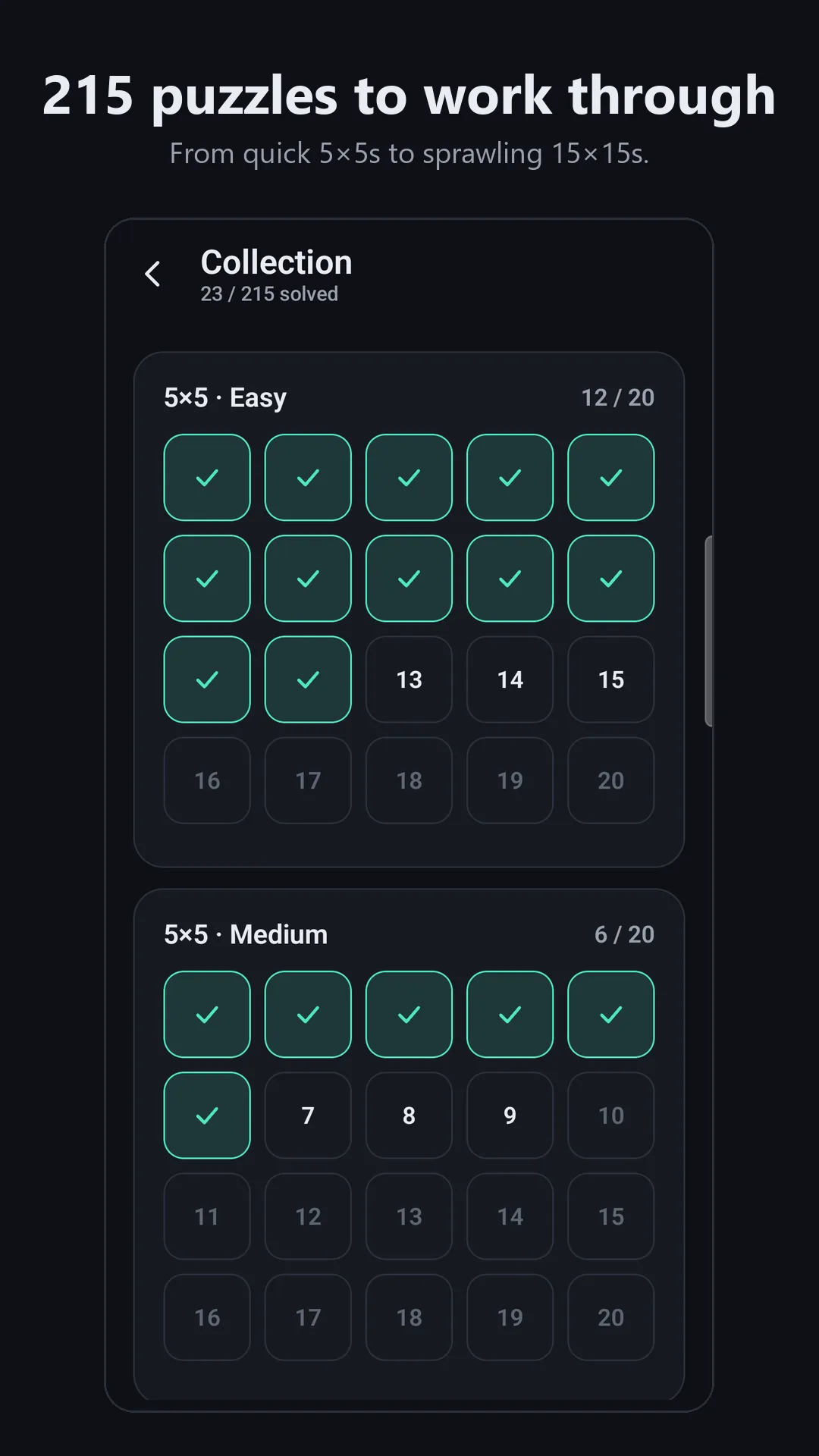
- Collection — 215 puzzles, from quick 5×5s to sprawling 15×15s, in sets by size and difficulty. Your progress is kept per puzzle.
- Practice — endless fresh puzzles at four sizes (5×5, 7×7, 10×10, 15×15) and four difficulty levels, from Easy to Expert.
A short how-to-play guide shows a solved example and the starting rules most players learn first.
How every puzzle is checked so it never needs a guess →
Get it on Google Play← All games