 EN
 FR
 ES
 DE

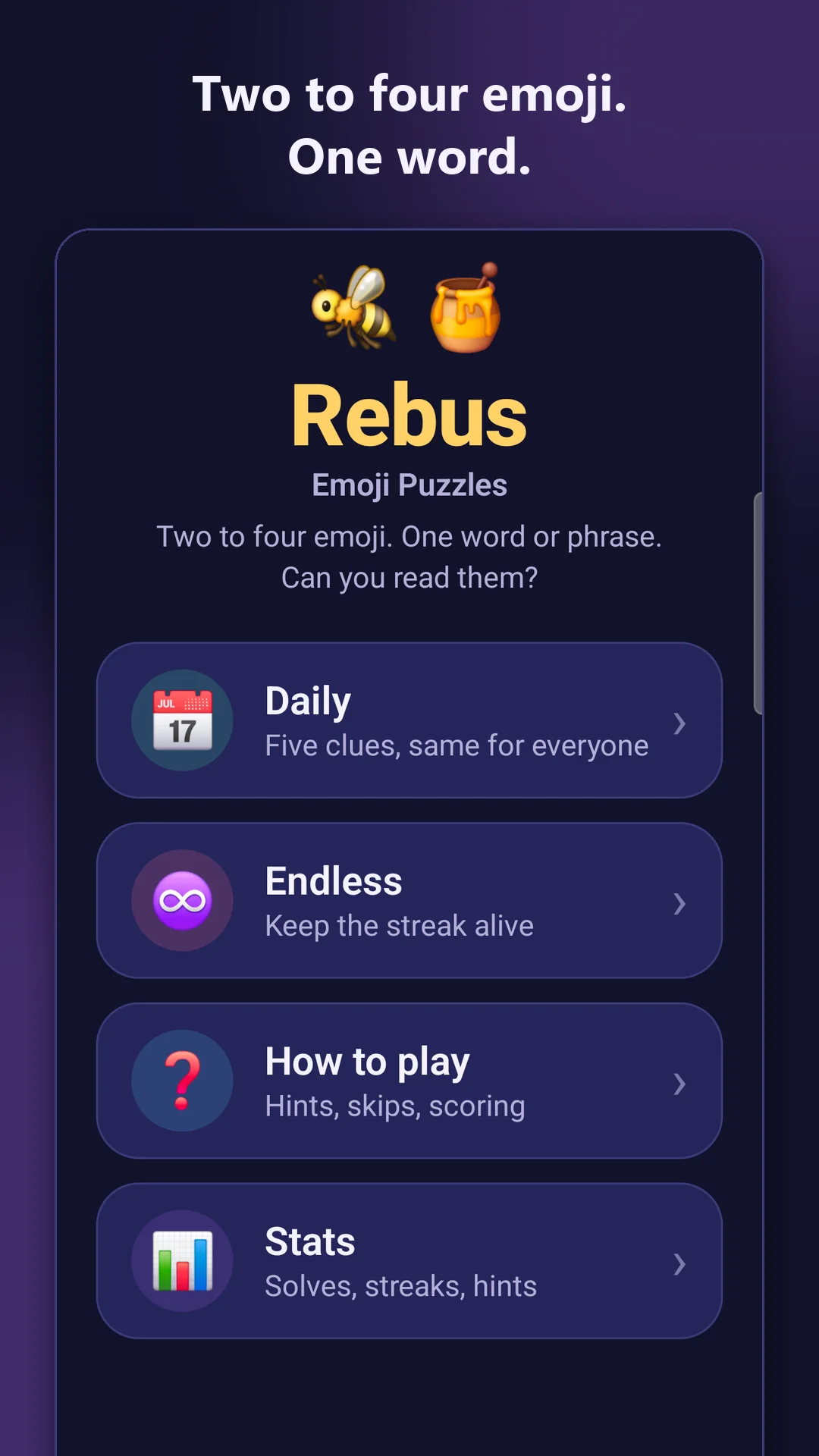
Rebus: Emoji Puzzles
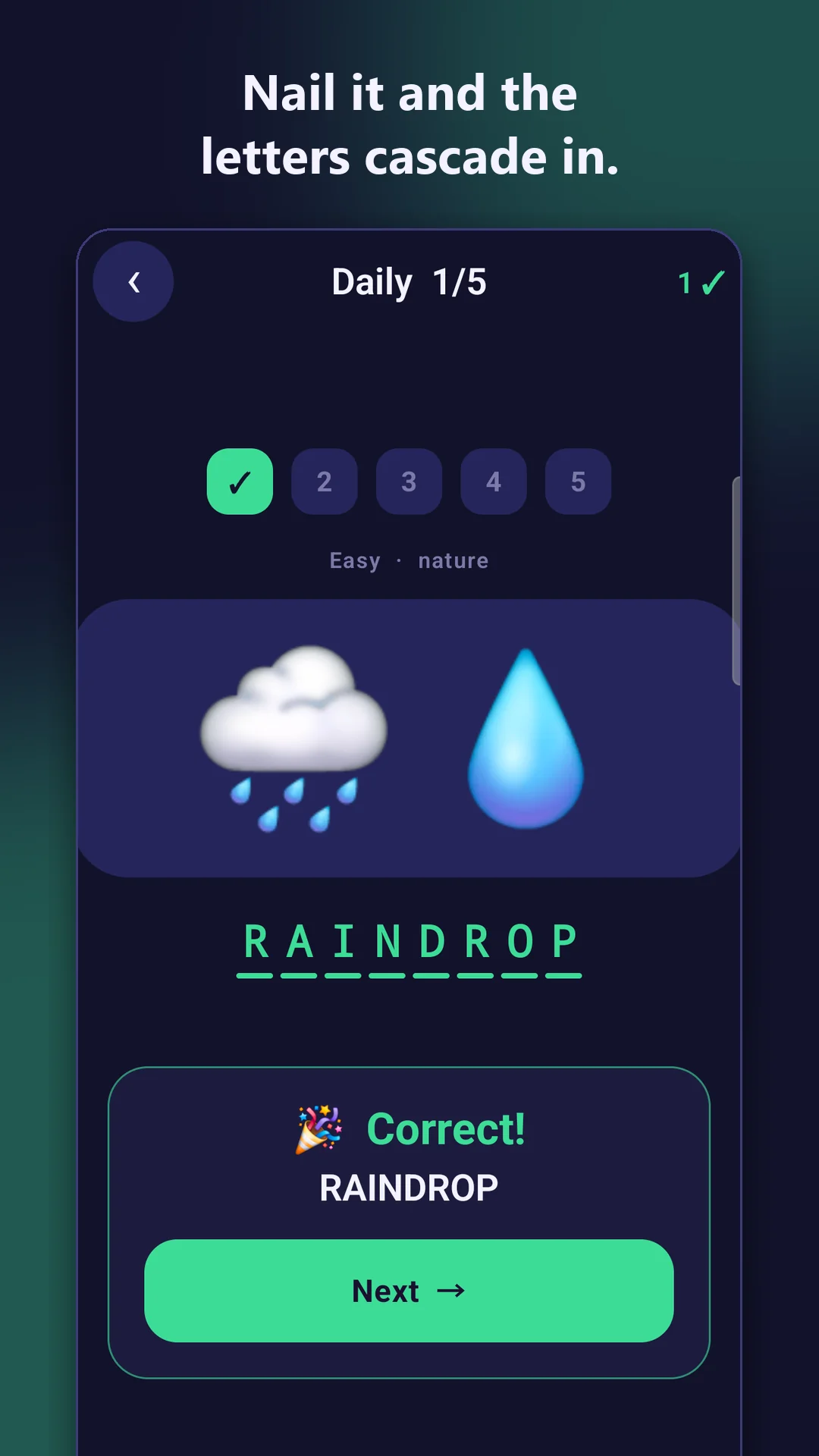
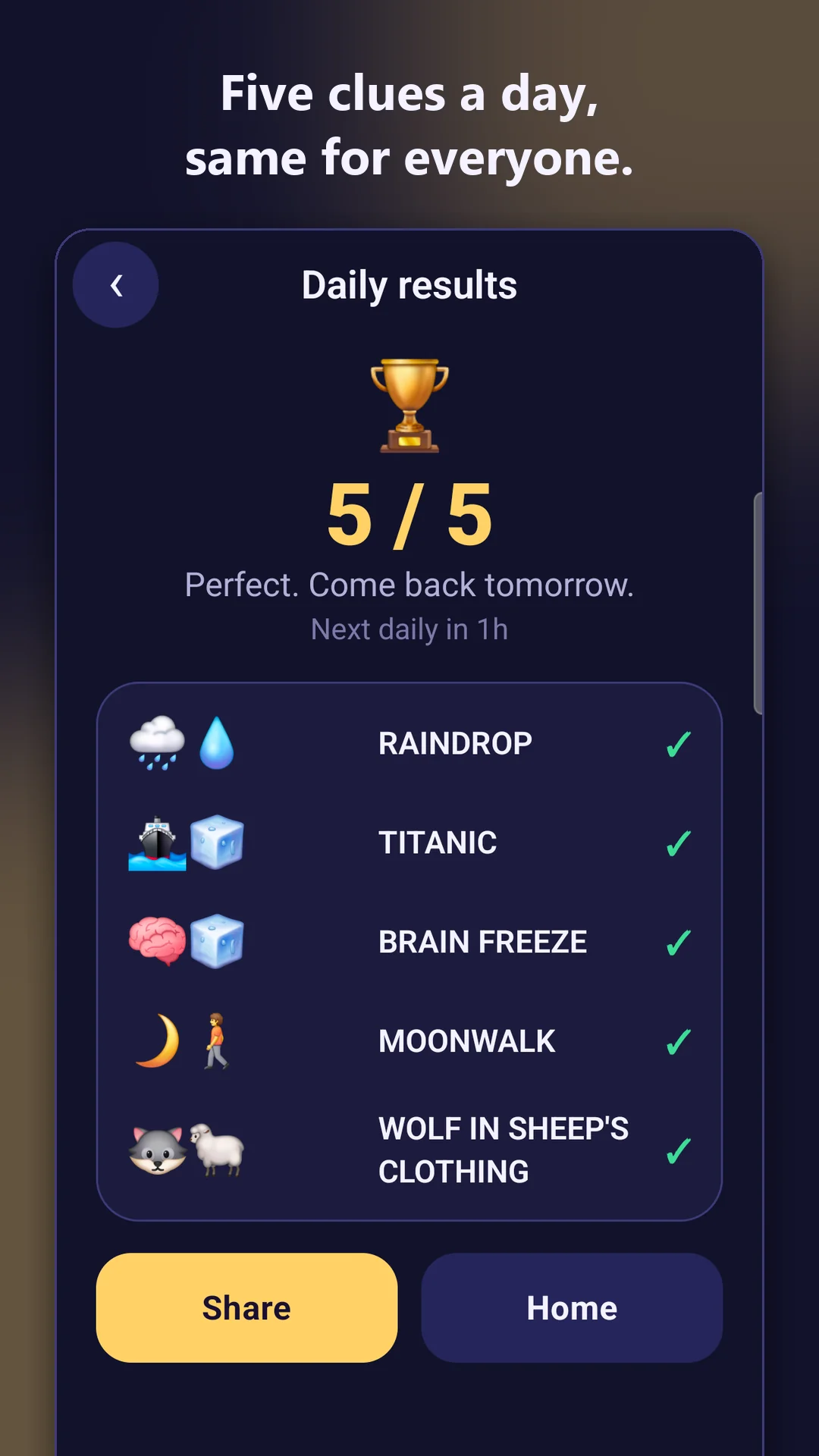
🔥🐕 is HOTDOG. 🌧️🎀 is RAINBOW. 🐝🍃 is BELIEF. Rebus shows you two to four emoji that together spell out something you already know — the whole puzzle is seeing it. Some clues are compounds, some work on sound rather than meaning, and some are ordinary sayings. Reading them out loud is the trick, and it is remarkable how often that alone is enough.
Three kinds of clue
Almost every puzzle in the game is one of three types, and knowing which one you are looking at is most of the work.
- Compounds. Two objects that join into one word — 🐱🐟 for CATFISH. The most literal kind and usually the easiest.
- Homophones. The emoji stands for a sound, not a thing. 🐝 means “be”, not an insect, which is why BELIEF is a bee and a leaf. These are the ones that need saying aloud.
- Sayings. A whole phrase rendered in pictures — 🐷✈️. Harder to see and the most satisfying when it lands.
Why the letter count is always shown
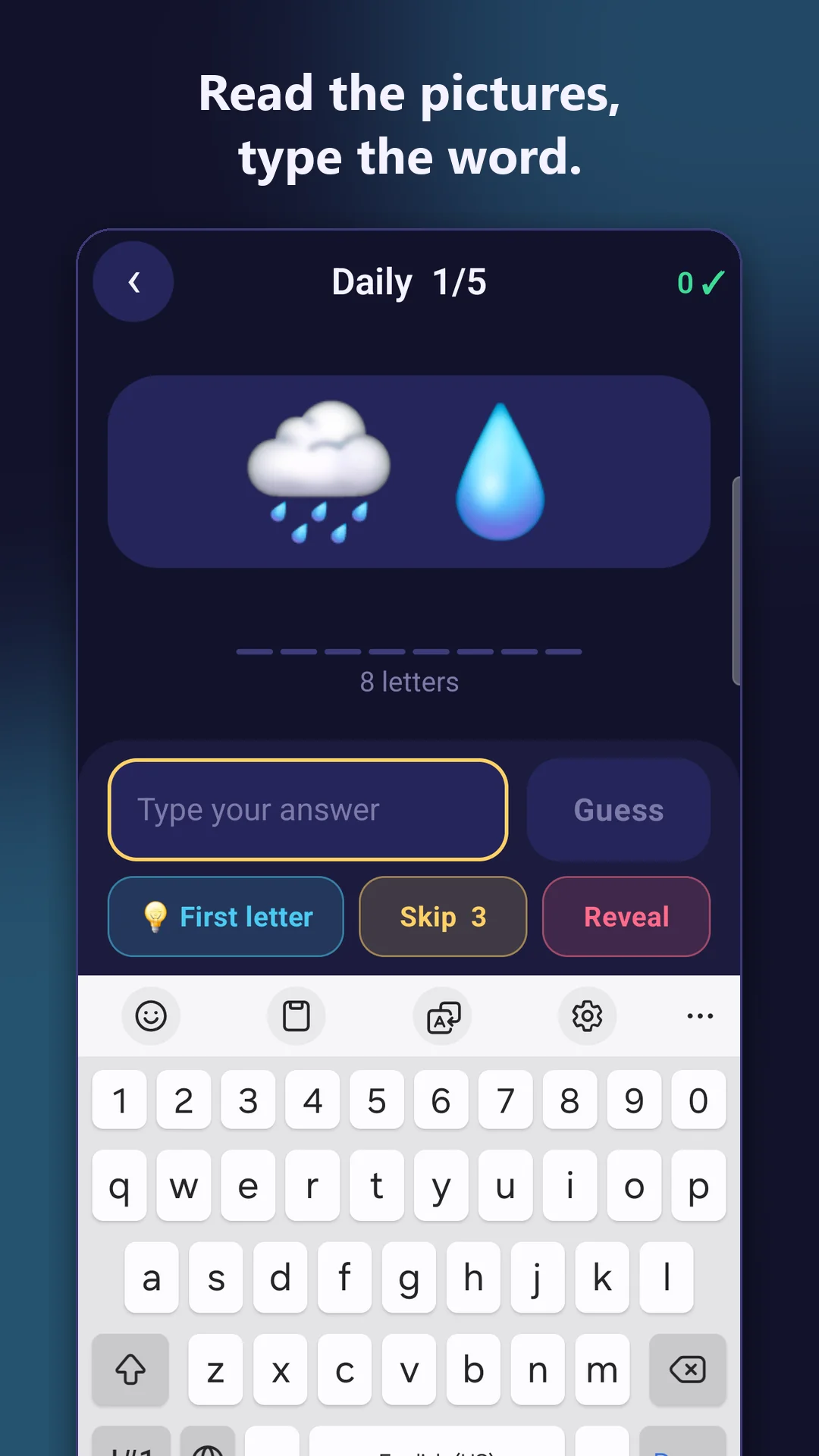
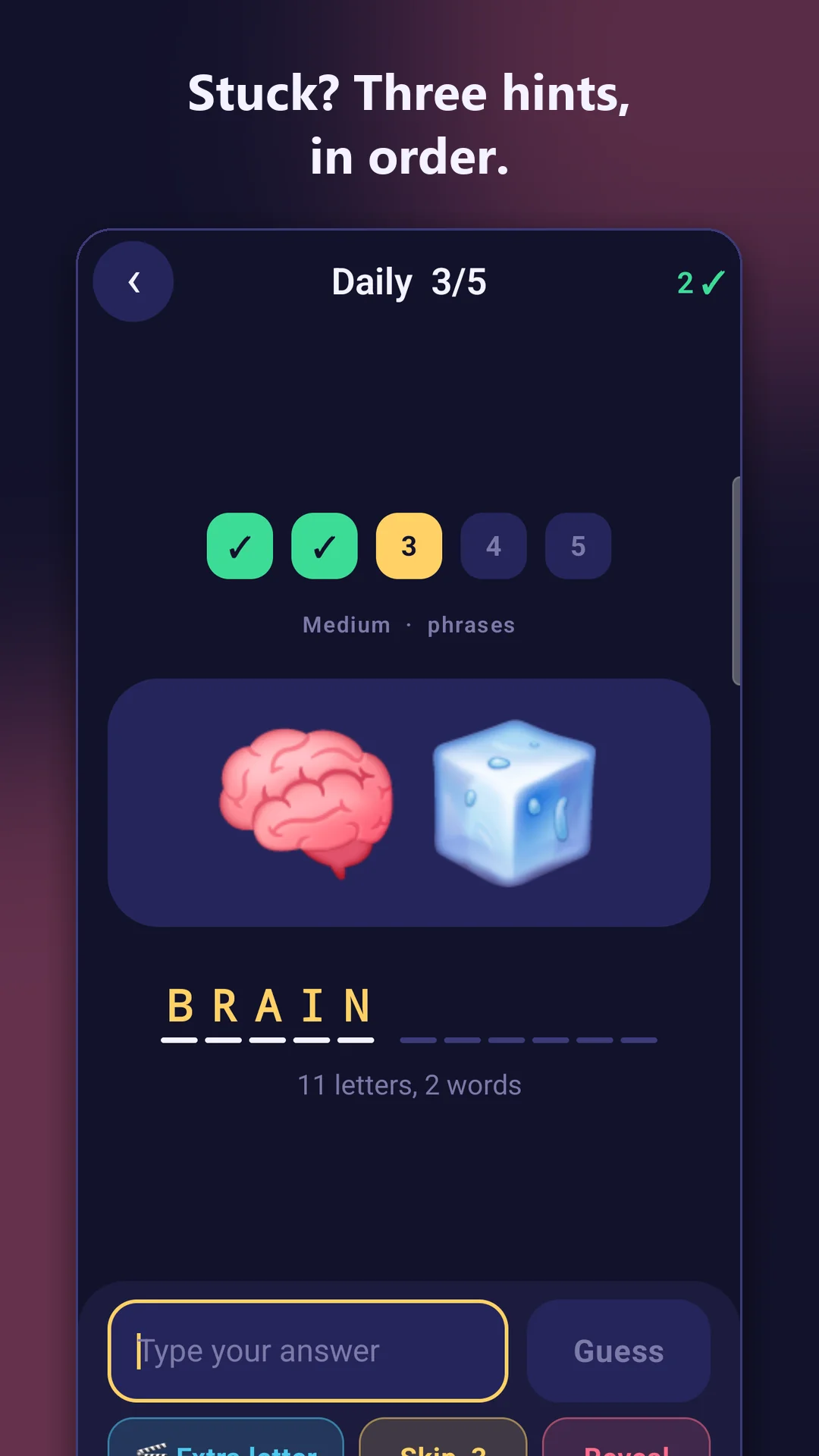
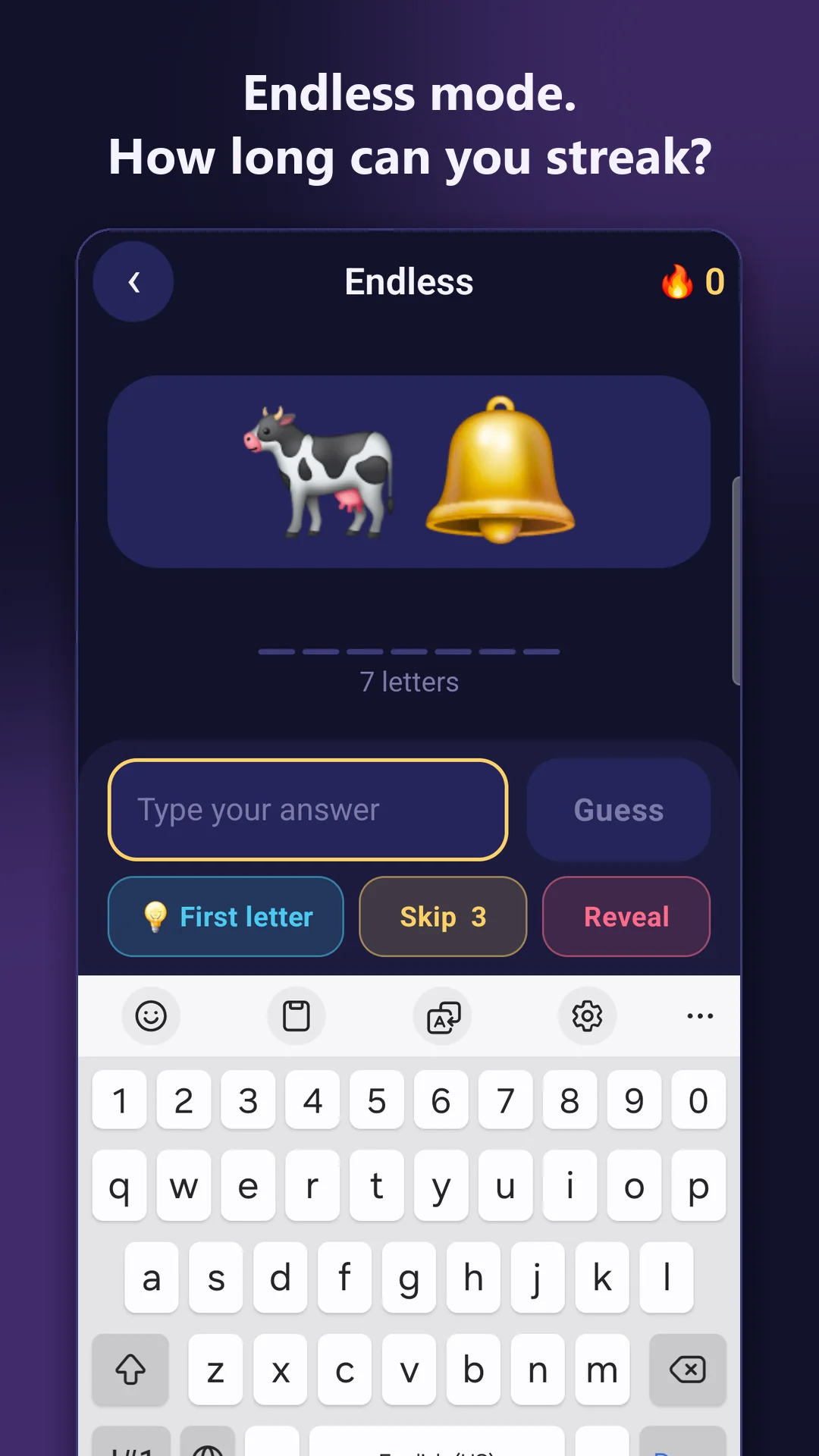
Every clue displays the length of the answer, and for phrases it shows the shape — how many words and how long each one is. That is not generosity, it is what keeps the puzzle fair. Without it, a two-emoji clue has an unbounded number of plausible readings and solving becomes guessing at what the setter had in mind. With it, you can test a candidate against the shape before typing and rule out most of the field instantly.
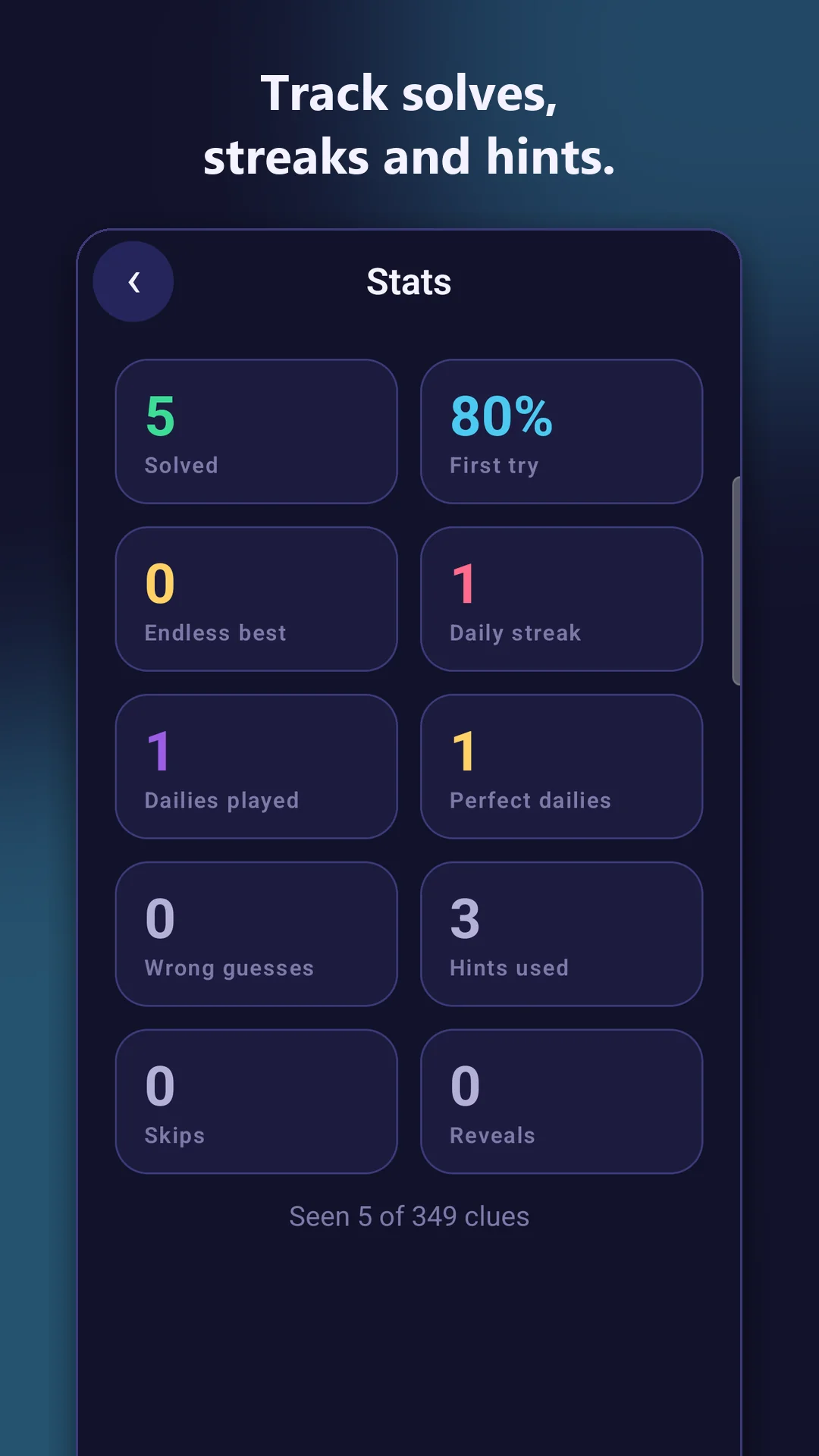
The hints then open in order: first letter, then a vowel, then an entire word of the answer. Wrong guesses are unlimited and the counter exists only for bragging rights, so nothing is lost by trying a reading you are not sure about. Three skips per session mean no single clue can wall you in.
Written by hand, on purpose
The 300-plus clues were written one at a time rather than generated, because this is the one game in the collection where generation does not work. A program can pair emoji with words that sound similar; it cannot tell whether the result is a clue a person will enjoy or a coincidence that only makes sense once you know the answer. Every clue here has been read back cold to check that it is solvable without knowing the answer first.
Two rules govern the whole set: answers are common words and well-known phrases, with no obscure trivia, and nothing depends on knowing one country's culture or slang. Spelling is forgiving on top of that — “hot dog” and “hotdog” both count, and so do the usual variants — because being marked wrong on a space is infuriating and teaches nothing.
← All games