 EN
 FR
 ES
 DE

Pollen: Honeycomb Words
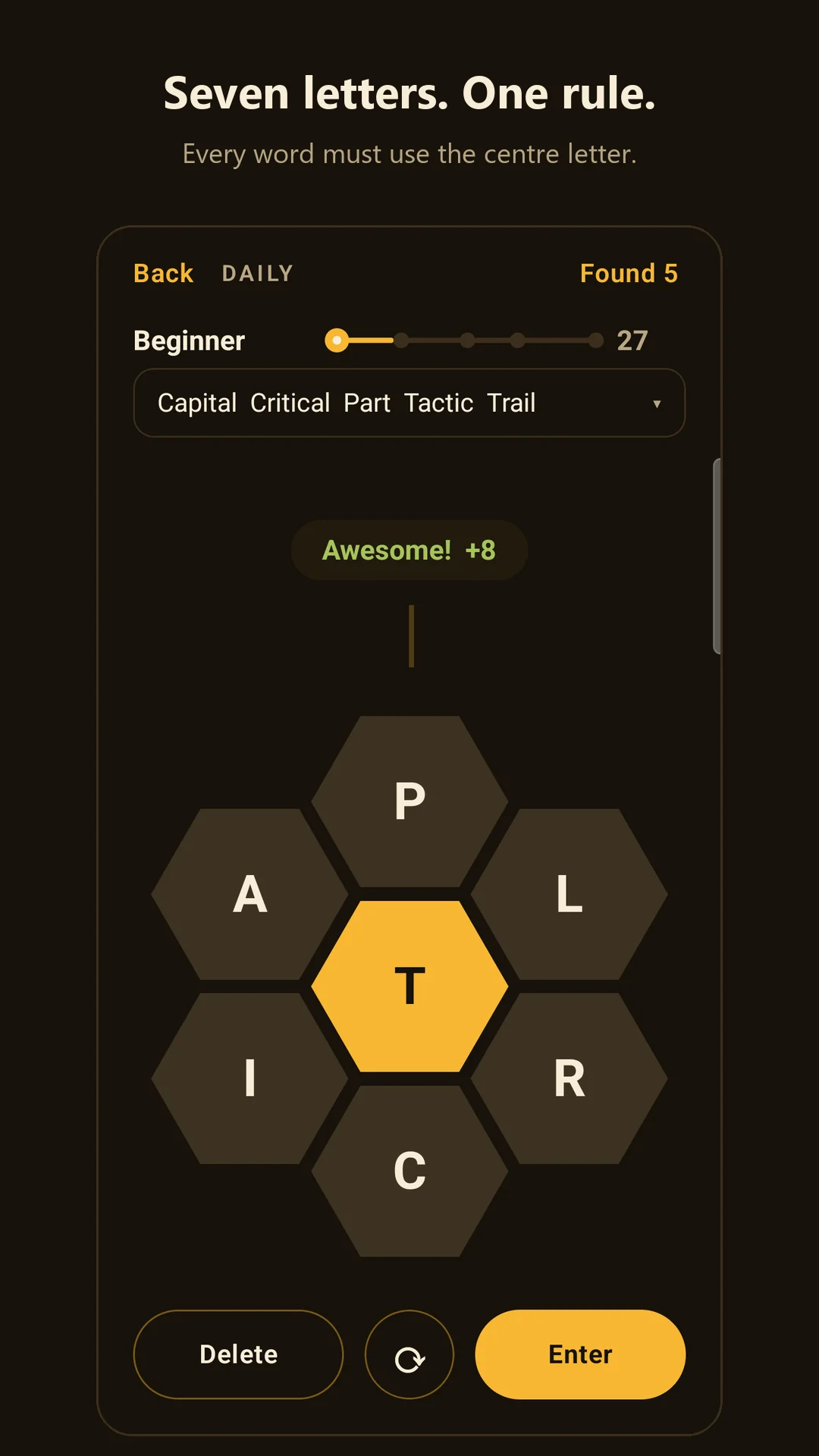
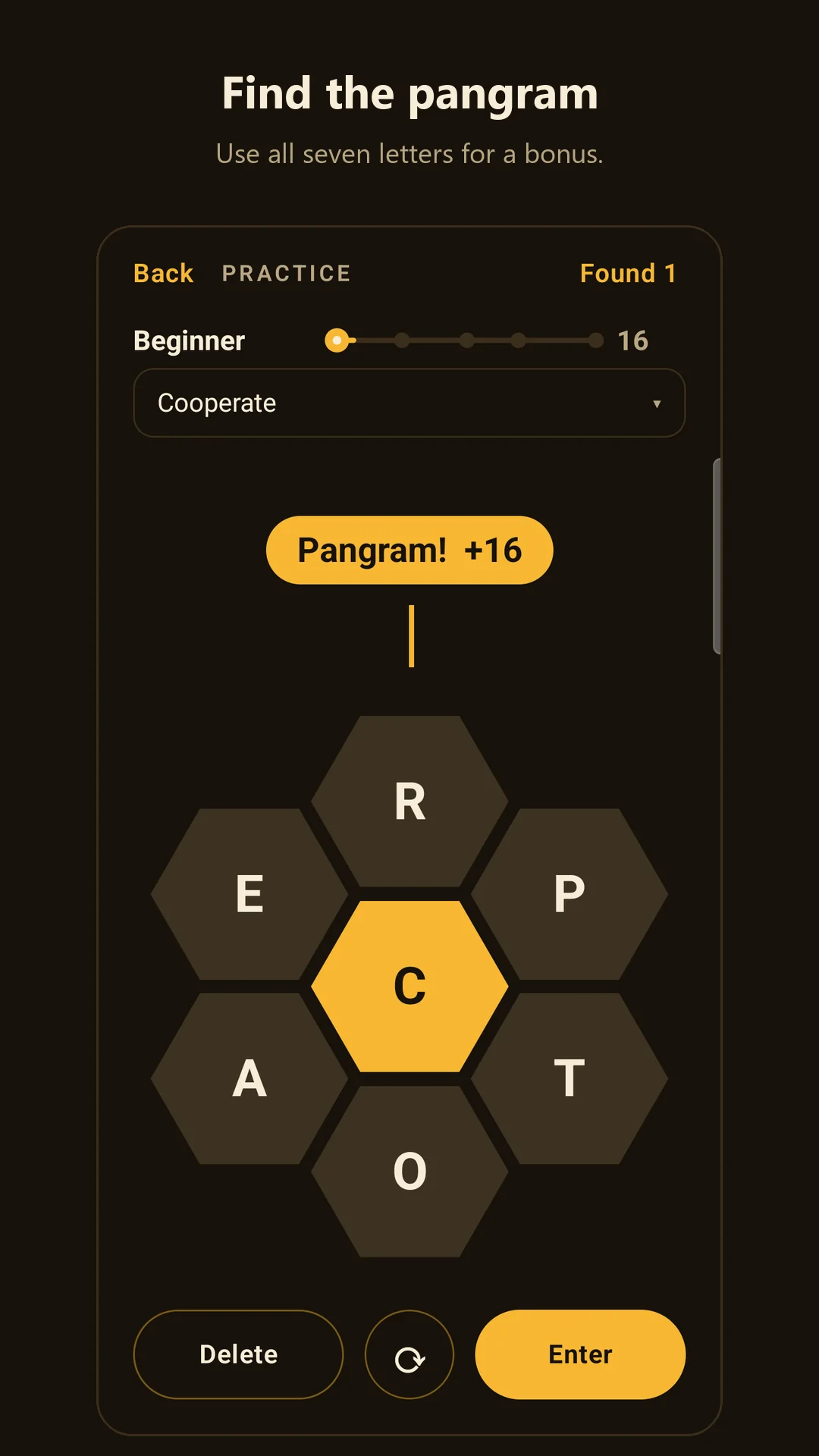
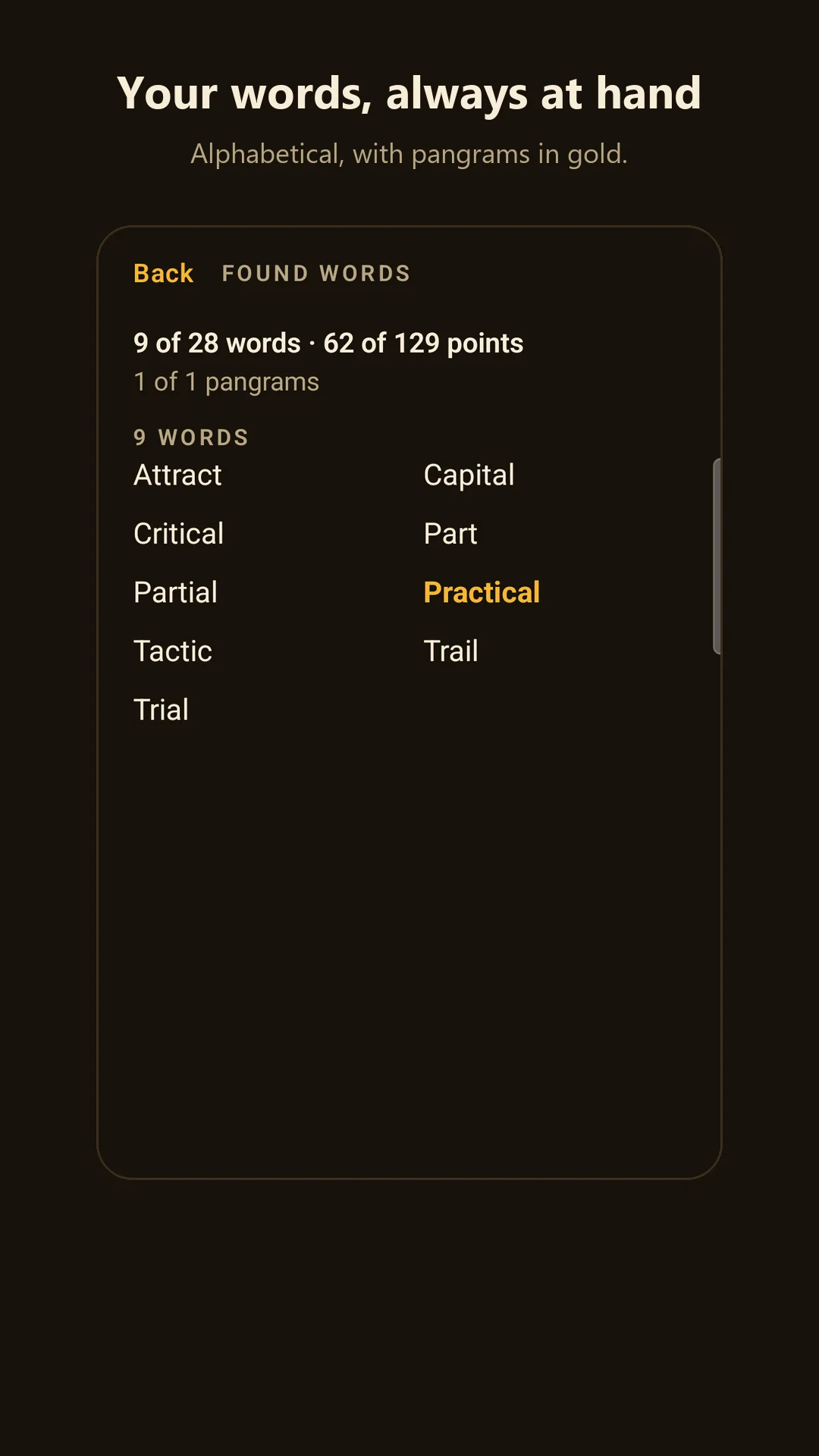
Pollen gives you seven letters arranged in a honeycomb with one of them in the middle, and asks how many words you can build from them. The single rule is that every word has to use the centre letter. Letters may be reused as often as you like, words are at least four letters long, and somewhere in every honeycomb sits at least one pangram — a word using all seven — worth a large bonus and usually the hardest thing on the board to see.
How a honeycomb works
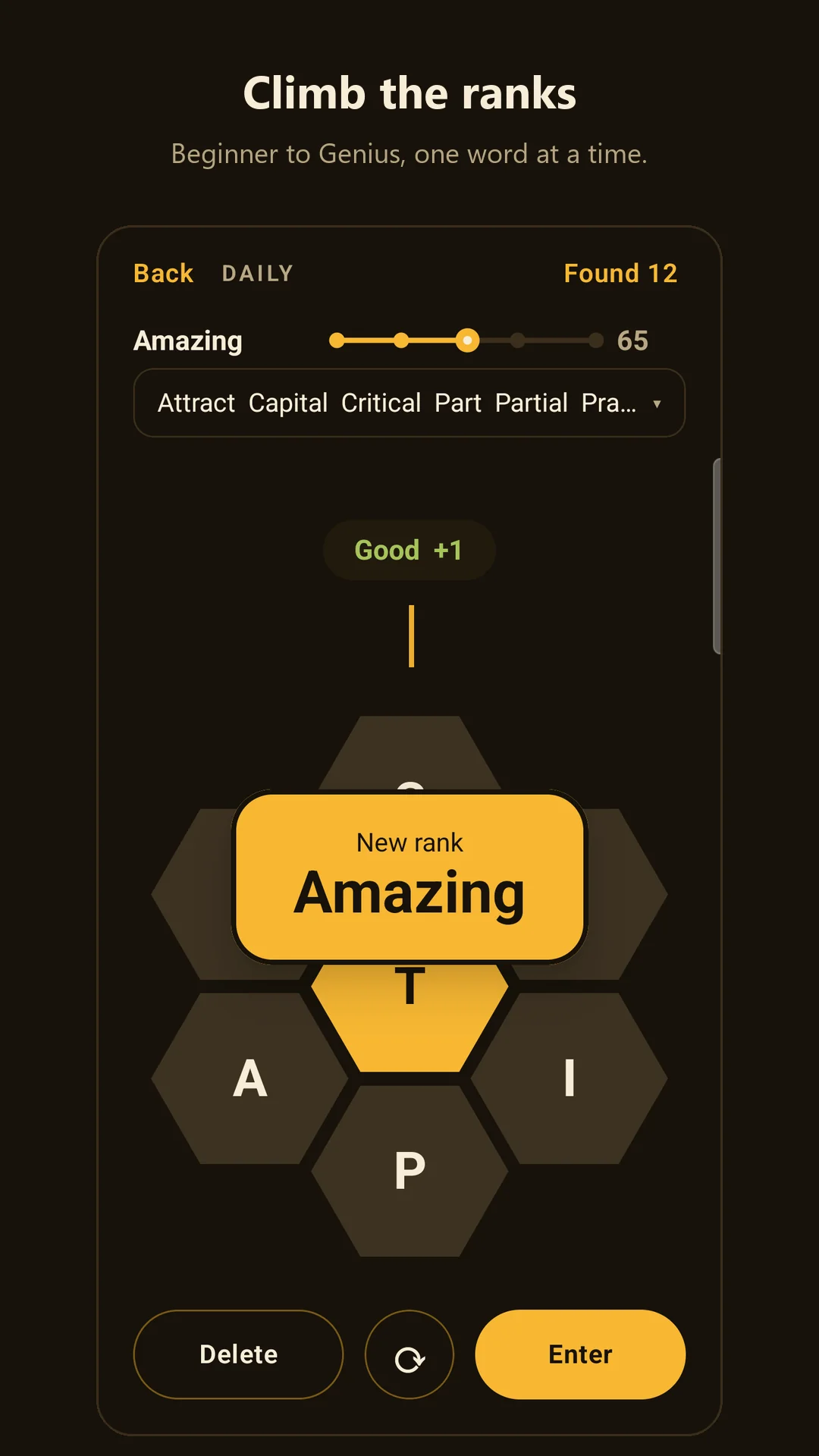
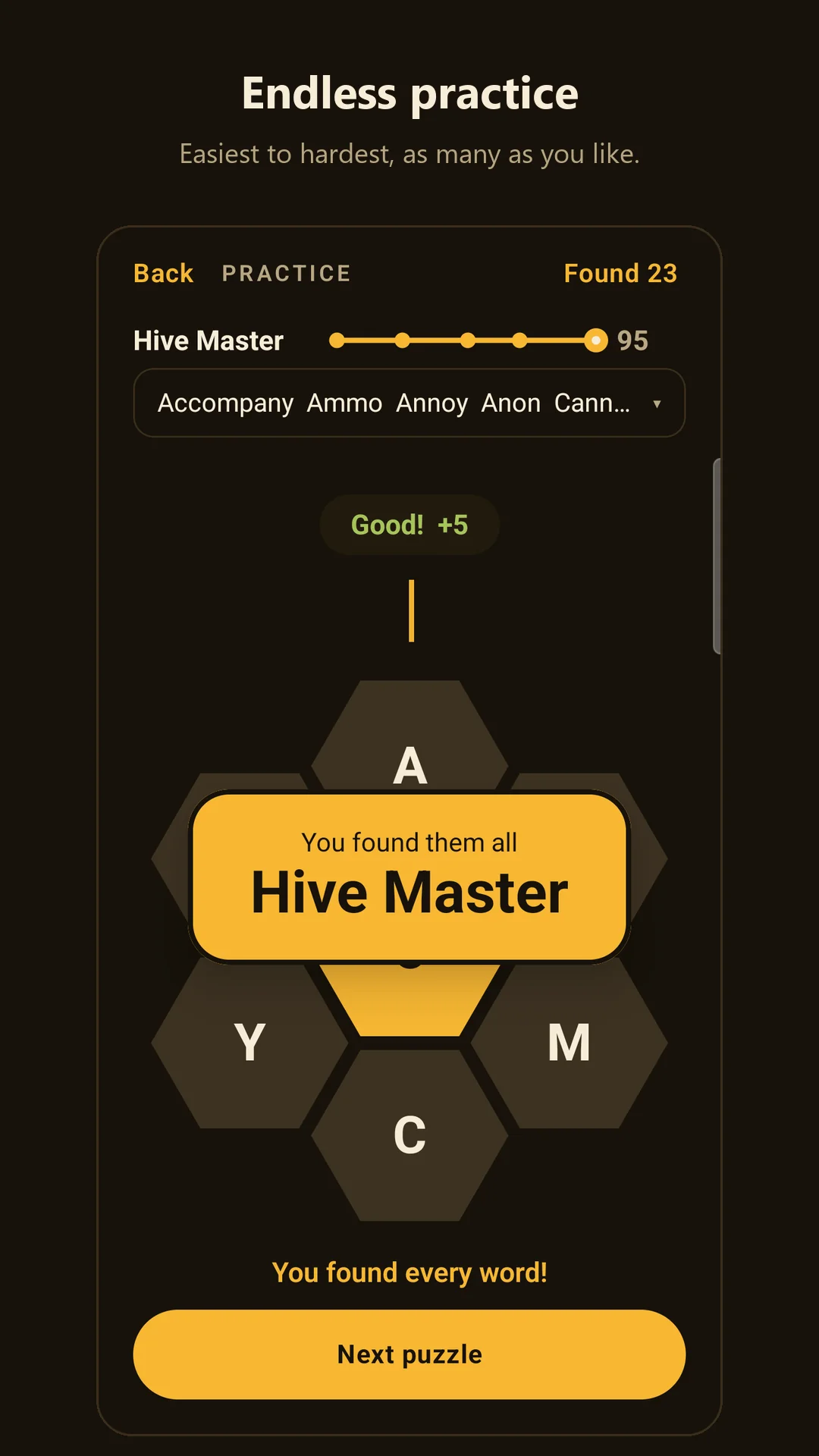
Tap the cells or type on your keyboard; either works, and most people end up doing both. A short word scores little, a long word scores more, and the pangram scores enough to move you up a rank on its own. Points fill a bar that runs from Beginner through Good and Amazing up to Genius. Reaching Genius means you have beaten the puzzle; finding every last word makes you a Hive Master, which is a different and much rarer thing.
There is no timer and there are no lives. The daily honeycomb is designed to be picked at in ten-second bursts across a whole day — every word you find is saved the moment you enter it, so closing the app mid-word costs you nothing. When the day rolls over you get the full answer list and can see which words you missed, which is where most of the learning happens.
The word list, and the missing S
A game like this lives or dies on its dictionary. Too permissive and you are typing nonsense that happens to be listed; too strict and you are certain of a word the game refuses. Pollen's list is drawn from a public-domain word list and then trimmed hard to words in ordinary use: no obscure filler, no proper nouns, and nothing offensive.
One deliberate omission is worth explaining, because it surprises people: there is never an S among the seven letters. An S would turn almost every noun on the board into a second word for free, and the puzzle would become a typing exercise rather than a search. Leaving it out costs a few valid words and buys a much better game.
Getting unstuck
- Shuffle early and often. The outer six letters rearrange at a tap. Your eye locks onto shapes rather than letters, and a reshuffle breaks the pattern for free.
- Hunt the pangram first, not last. Write the seven letters out in your head and look for a common prefix or suffix among them. Finding it early lifts your score enough to make the rest of the puzzle relaxed rather than a grind.
- Work the centre letter deliberately. Since every word contains it, try it in each position — first, second, last — rather than only at the start, which is where most people get stuck.
- Come back to it. The no-timer design is not decoration. Words that are invisible at breakfast are obvious at lunch, and the puzzle is built to be left alone and returned to.
← All games