 EN
 FR
 ES
 DE
Epoch: History in Order
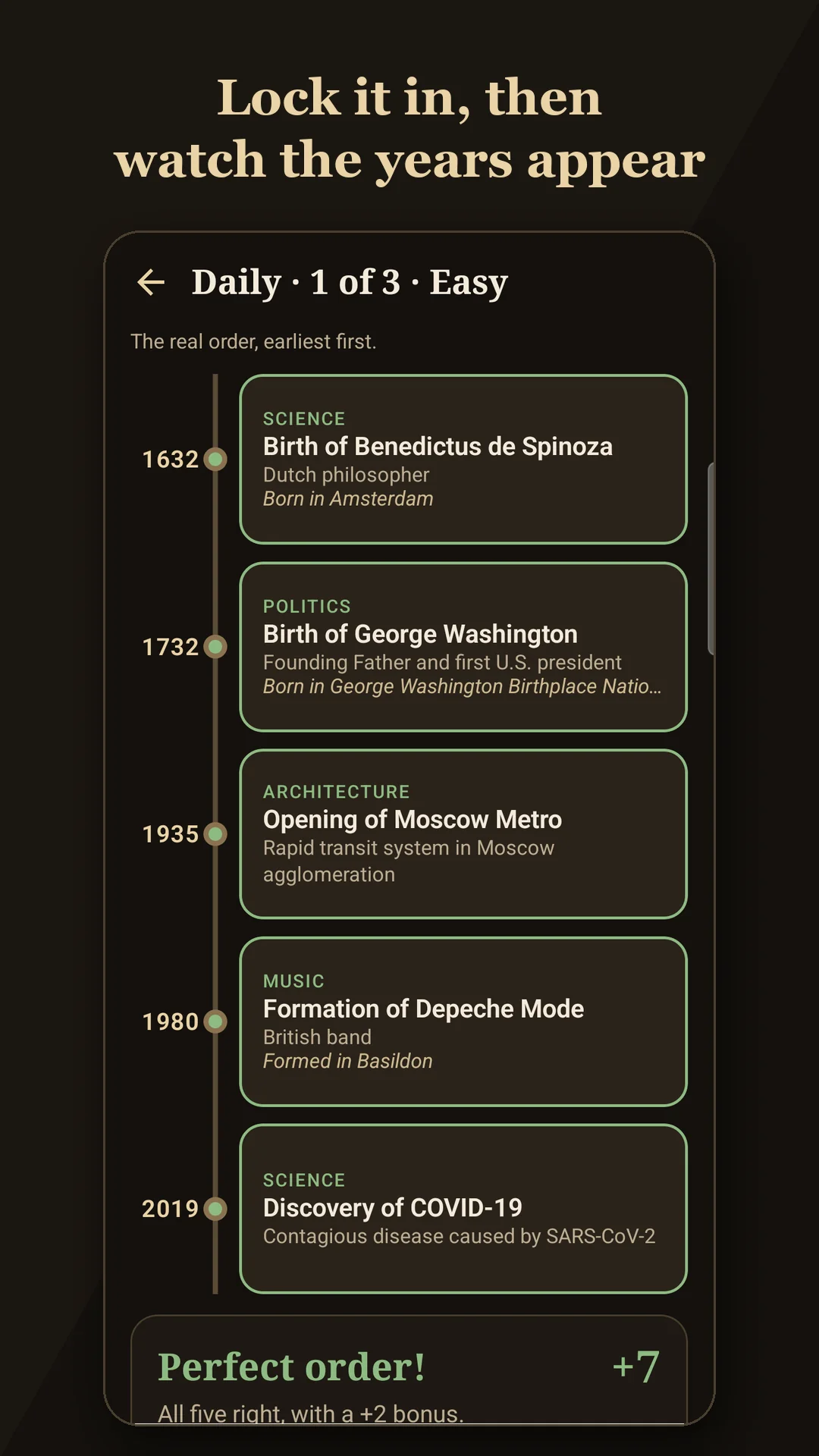
Printing press. Telephone. Penicillin. Moon landing. Wi-Fi. You know all five — but could you put them in order without hesitating? Epoch shows you five moments from the past, shuffled, and asks you to arrange them on a timeline from earliest to latest. Lock in your answer and the cards slide into their true order, the years appear beside them, and you see exactly which ones you had right. Most rounds take under a minute. The argument they start about whether the Lateran Treaty really came before Kevlar can take longer.
How a round works
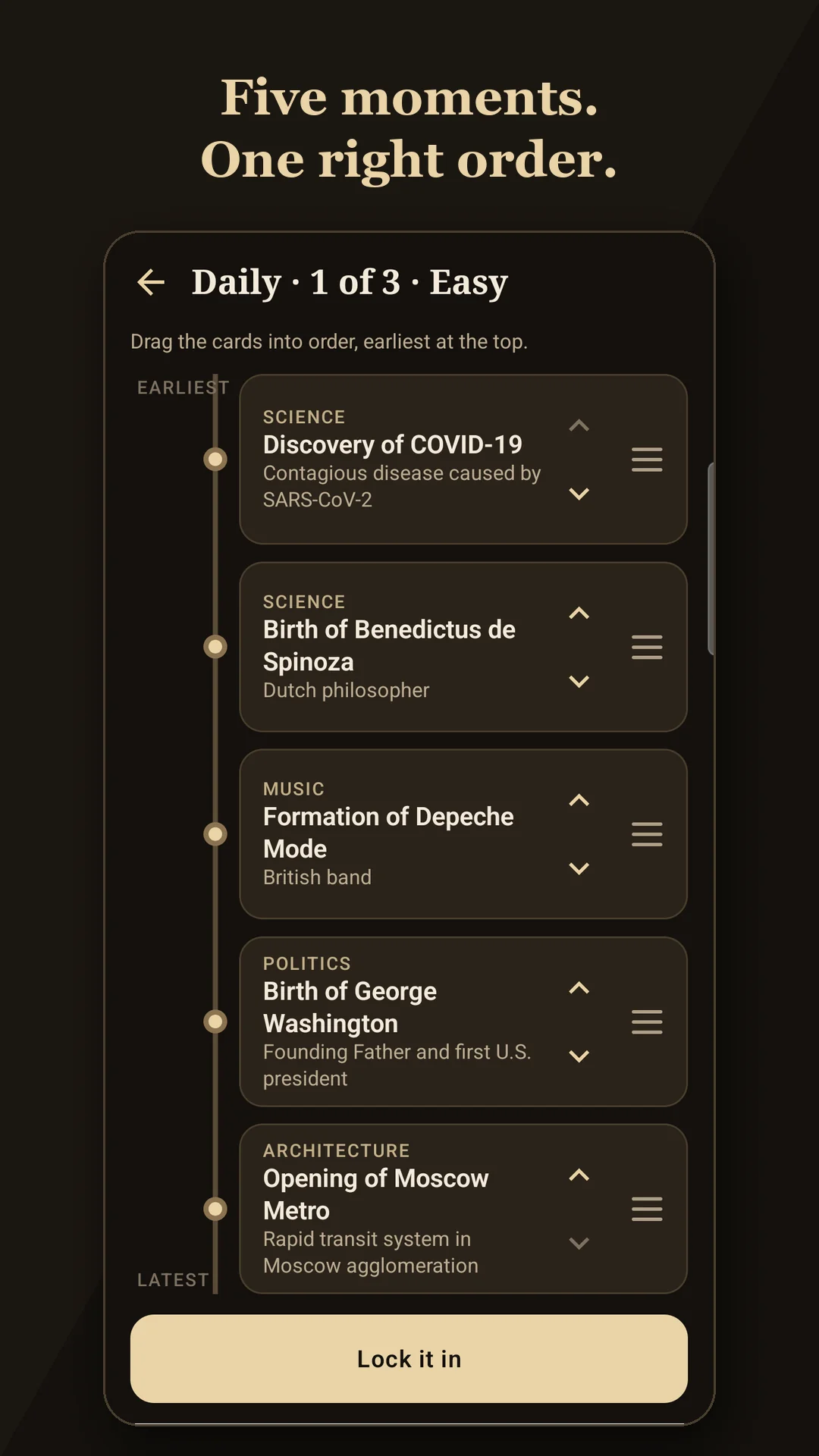
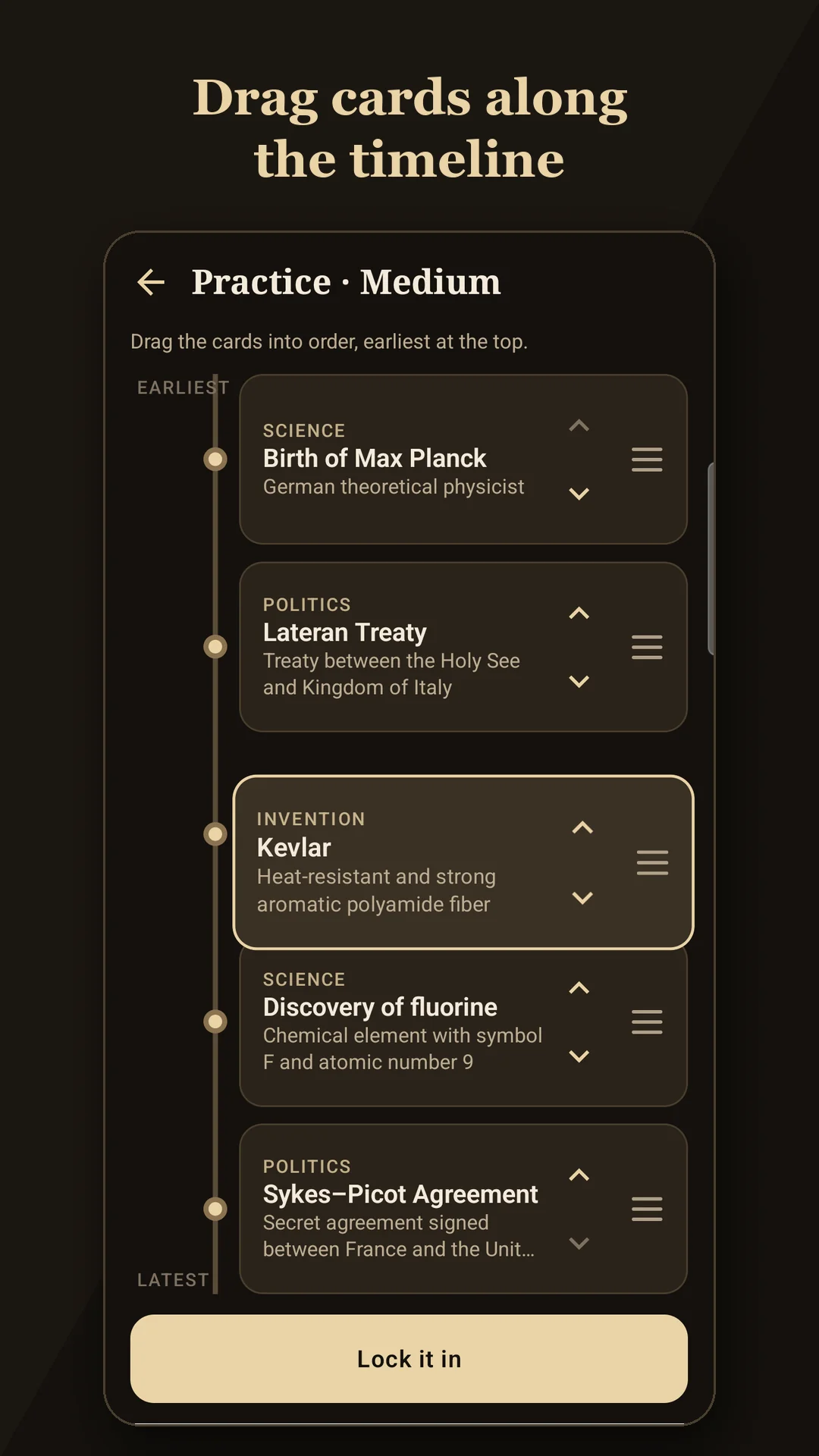
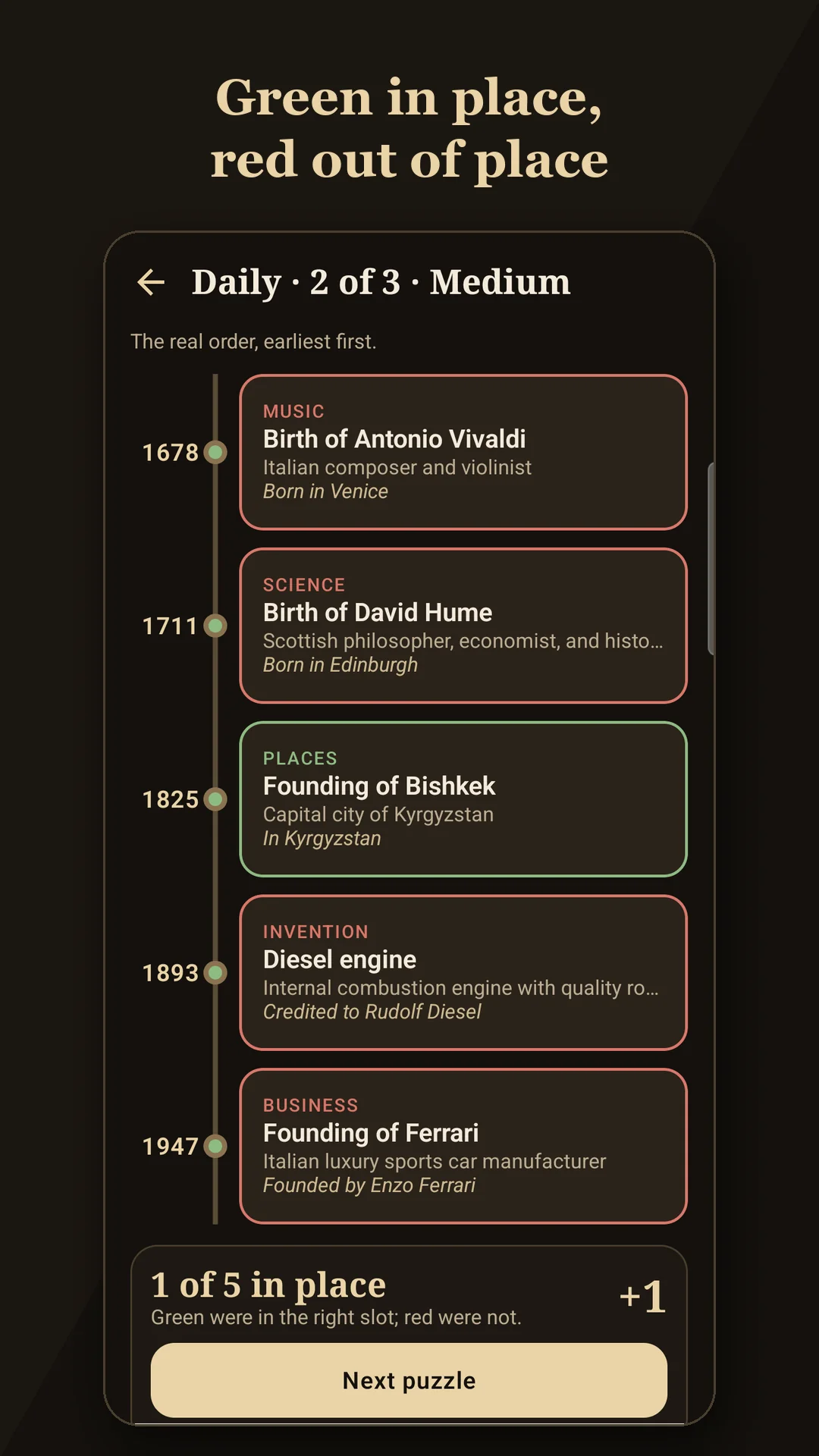
Each card names an event, gives it a category, and adds a one-line description — Birth of George Washington: Founding Father and first U.S. president. The events range across inventions and discoveries, births of famous people, battles, treaties, films, albums, buildings and space launches. Drag a card along the timeline, or nudge it with the arrows, until the earliest event is at the top and the latest at the bottom. When you lock it in, every card turns green if it is in the right slot or red if it is not, and each one reveals its year along with a short fact.
Scoring is simple: one point for every card in the right slot, plus a bonus of two when all five are right, so a perfect round is worth seven. Partial credit matters. Three of five is a very different result from none, and the timeline shows exactly where the two you swapped belonged.
Three ways to play
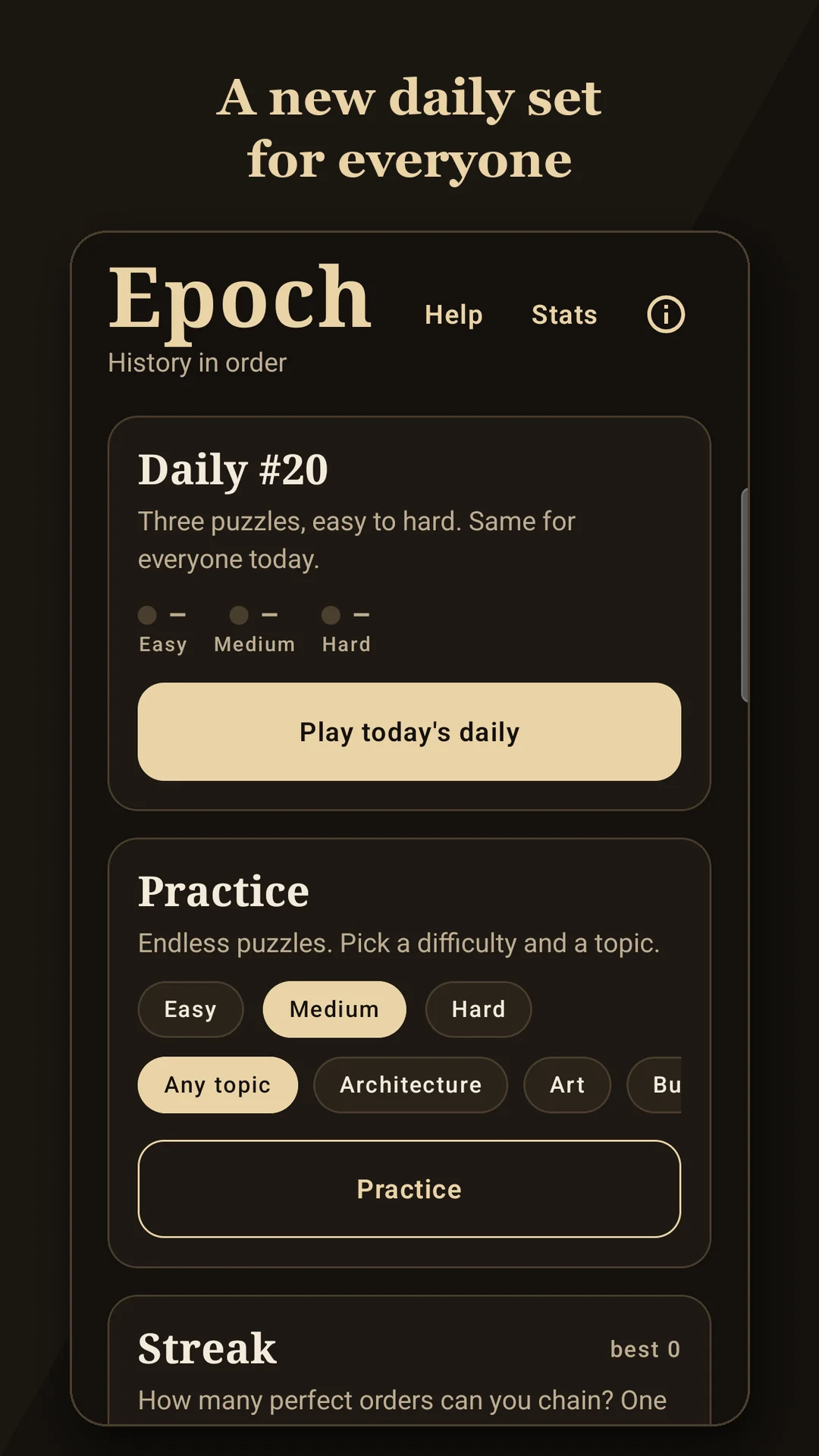
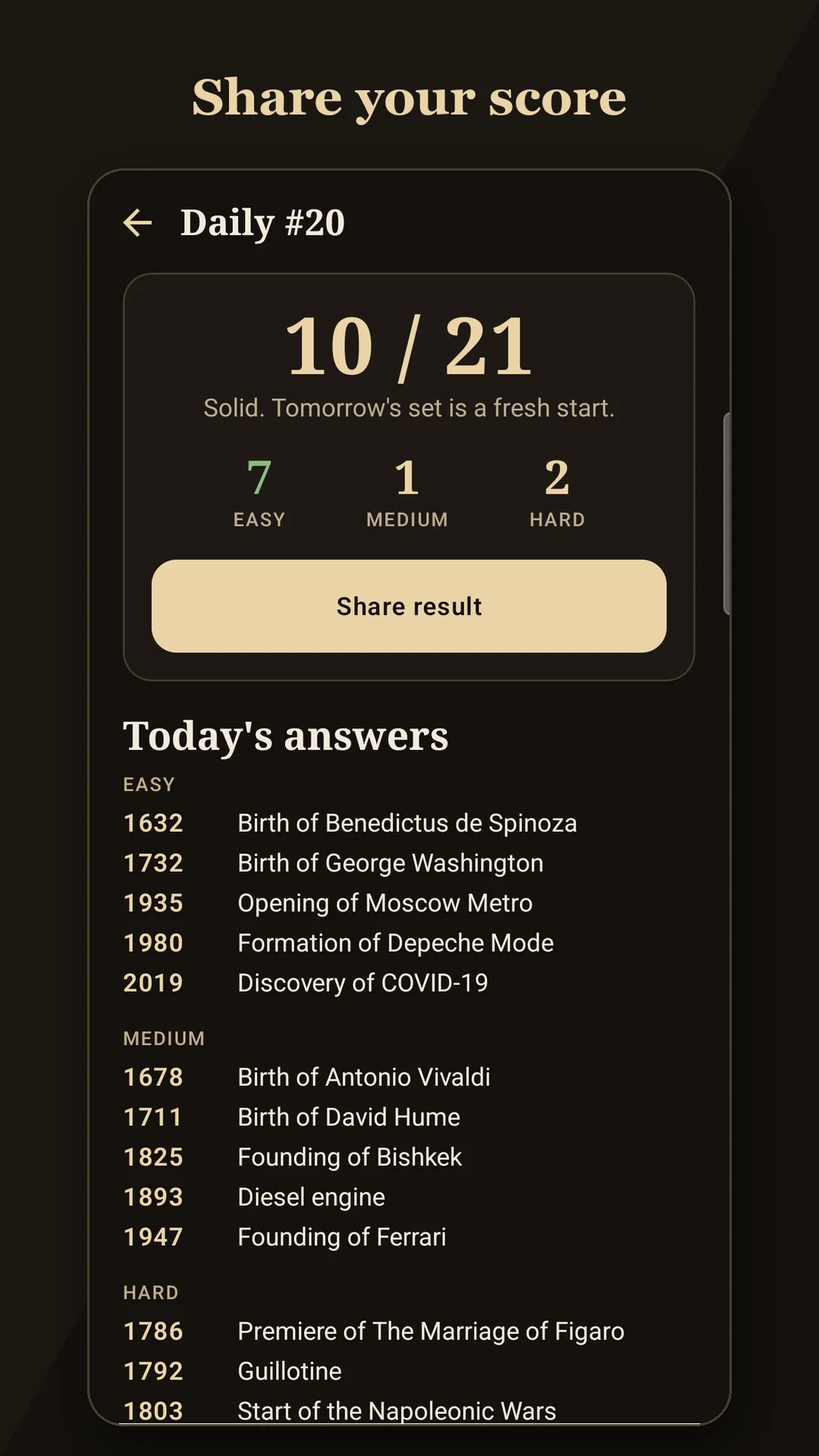
- Daily — three puzzles a day, easy, medium and hard, the same for everyone. One attempt each, scored out of twenty-one, with a result you can share with the friend who claims to know history.
- Practice — endless puzzles at the difficulty you choose, narrowed to one topic if you like: science, art, war, film, music, sport, space, architecture and more. Any puzzle you get wrong can be retried.
- Streak — chain perfect orders. The difficulty rises as the run grows, and a single slip ends it.
What makes a round hard
Difficulty in Epoch is about spacing. An easy round spreads its five events decades apart across several centuries: you may not know the year Spinoza was born, but you know it was long before the discovery of COVID-19. A hard round packs five events into a few years, and then only real knowledge separates 1957 from 1961. The same five names can make an easy puzzle or a brutal one depending on how close together they sit.
The 1,500-plus events were curated by hand, running from the Battle of Marathon to the James Webb Space Telescope, with their data derived from Wikidata, the open knowledge base. Every event belongs to a category, which is what lets practice mode be narrowed to the subjects you enjoy — or to the ones you keep getting wrong.
Placing five events
- Anchor first. Find the one event you are certain of and place everything else relative to it, rather than trying to date all five.
- Centuries before years. Separate the obviously old from the obviously modern, then spend your attention on the close pairs.
- Use the descriptions. A person has to be born well before the company, building or treaty that carries their name.
- Read the facts afterwards. The line revealed with each year is where most of the learning happens, and it is what makes the next puzzle easier.
← All games