 EN
EN FR
FR ES
ES DE
DE
Quartet: Word Groups
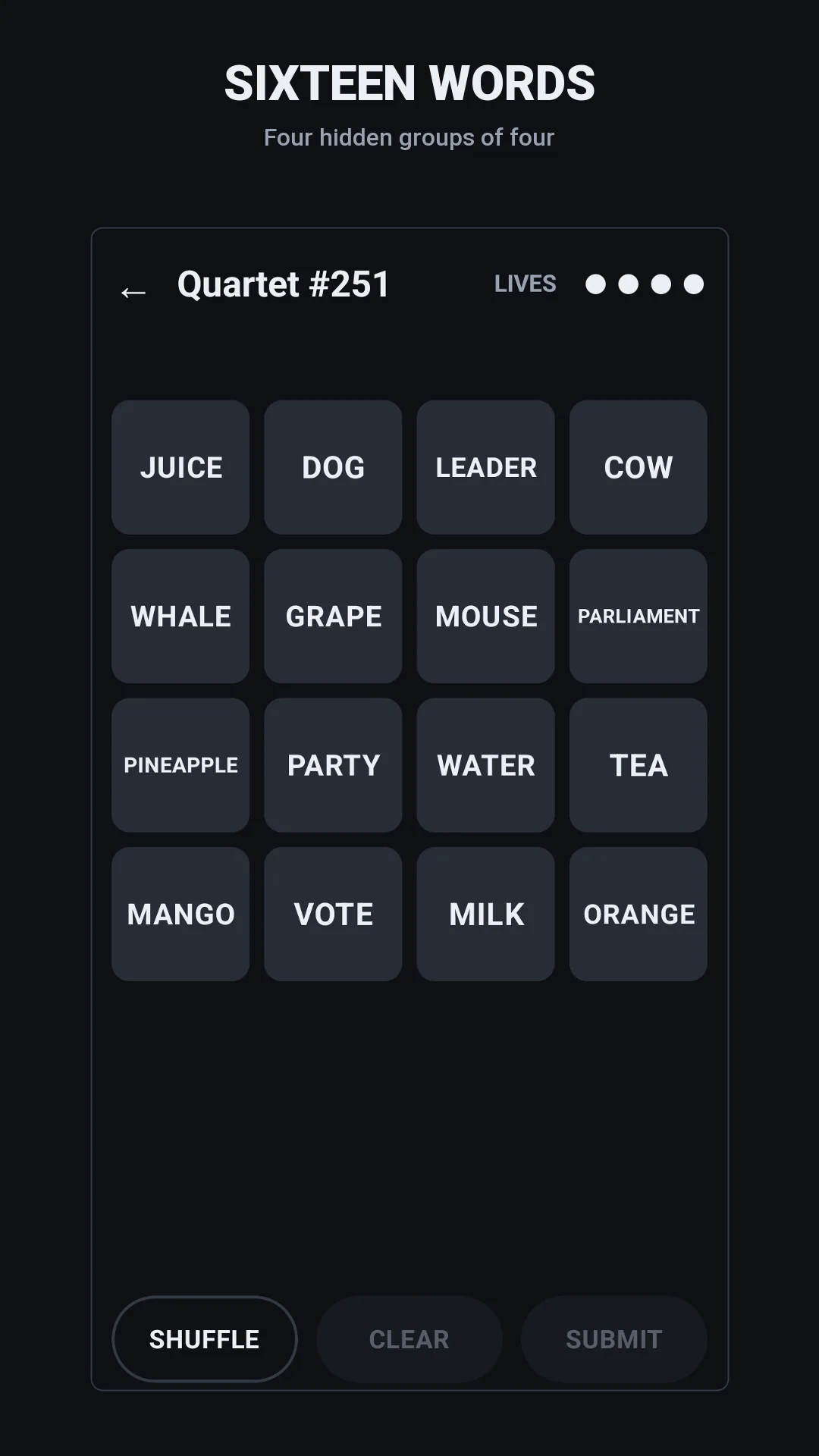
Quartet lays out sixteen words in a four-by-four grid. Hidden inside are four groups of four — four kinds of weather, four things you would find in a kitchen, four words that precede “ball” — and your job is to sort them before four mistakes end the round. The rule that makes it a fair puzzle rather than a guessing game is simple to state and hard to build: every word belongs to exactly one group, and there is always precisely one correct sorting.
How a round works
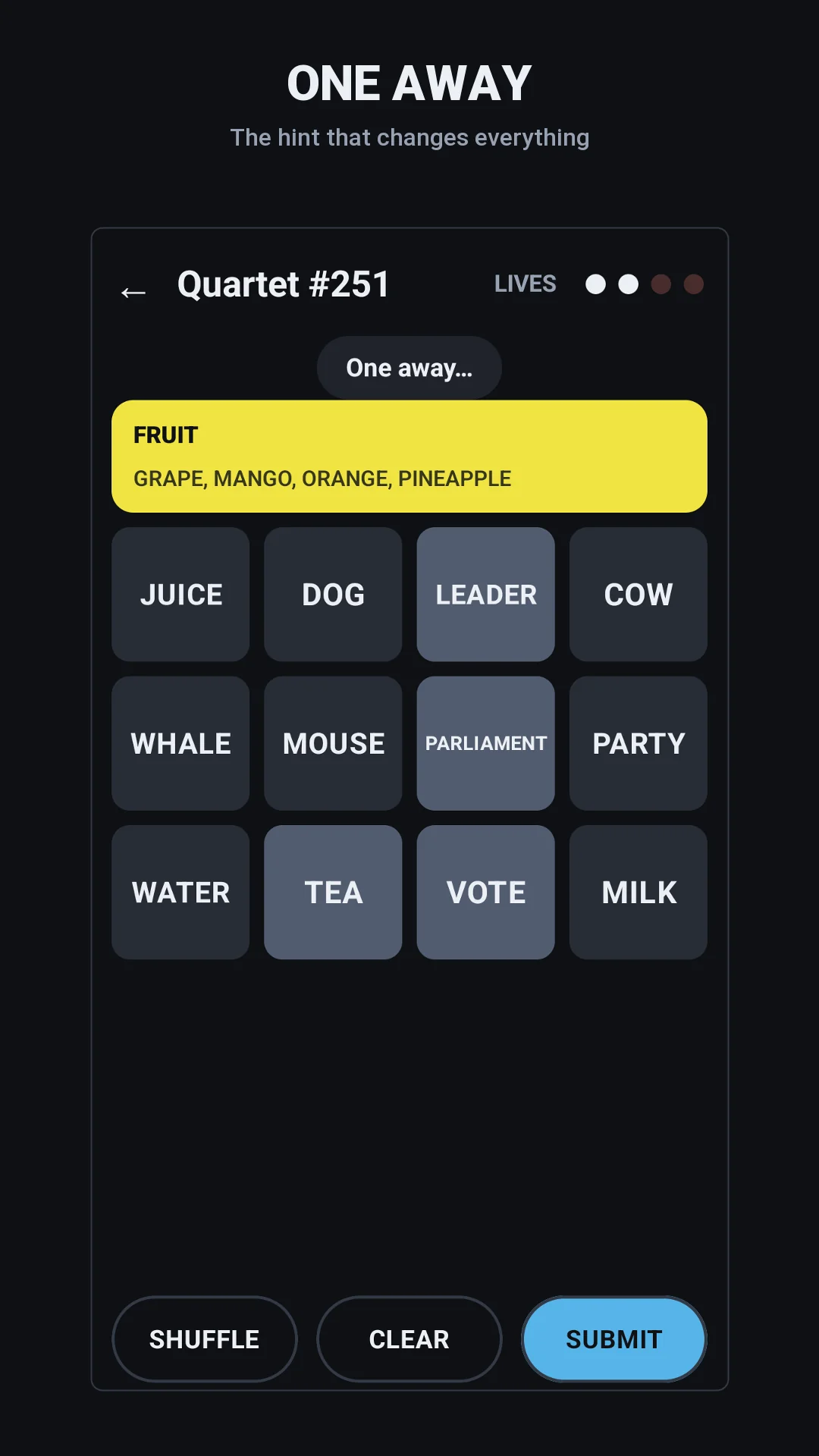
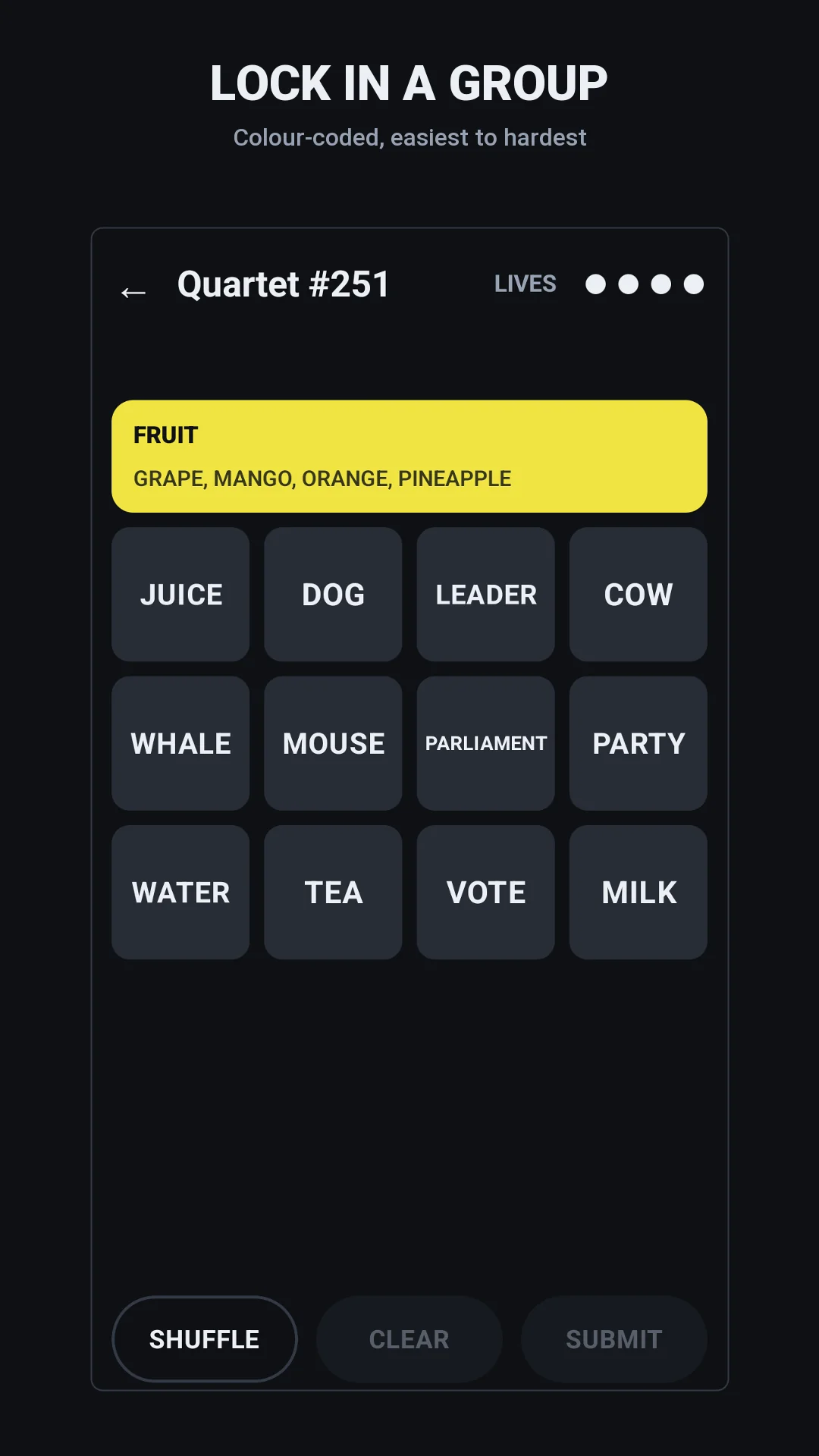
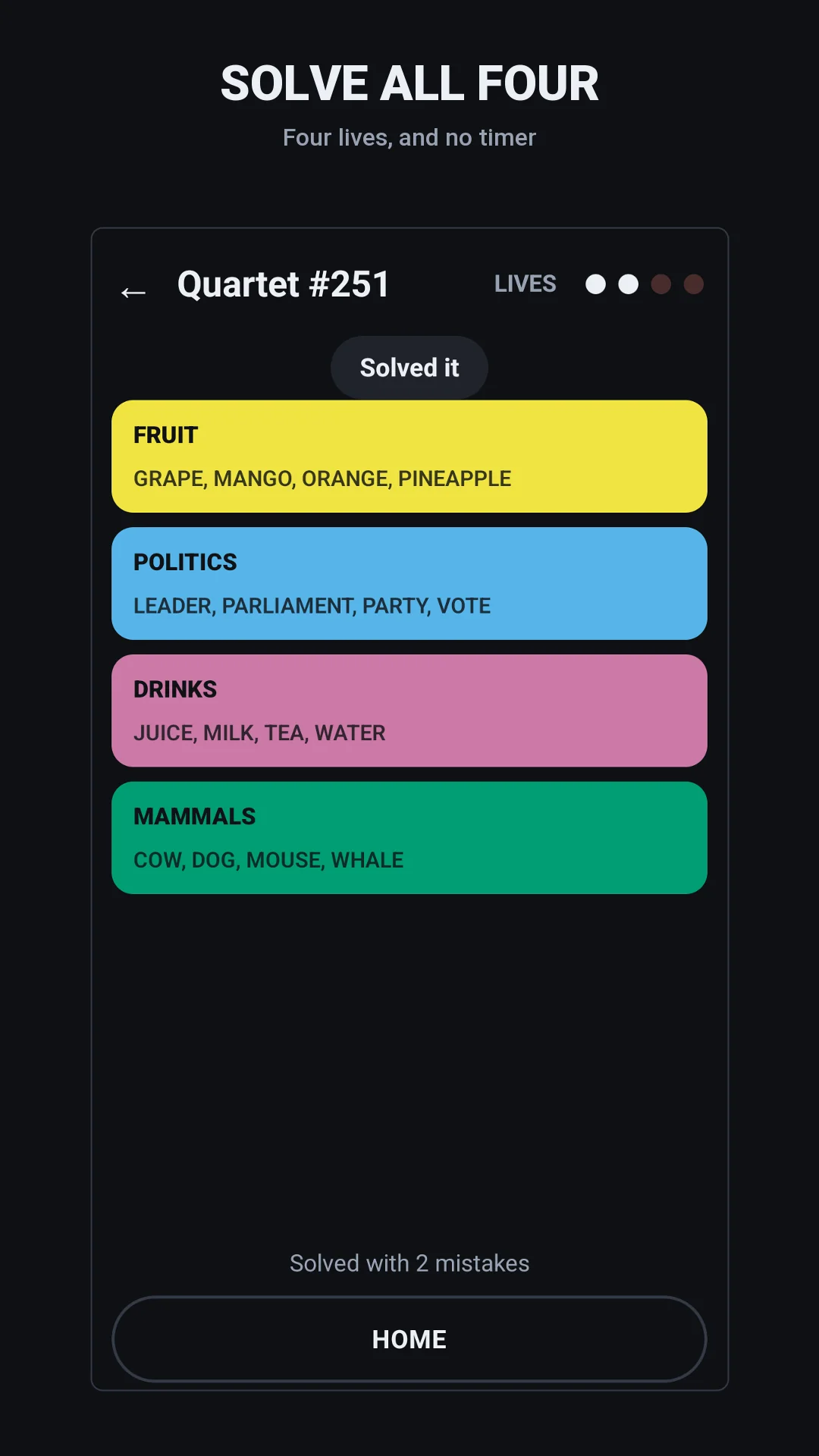
Select four words you believe share a category and submit them. If you are right, they lift out of the grid, lock into a coloured band at the top, and the category name is revealed. If you are wrong you lose one of four lives — but if three of your four were correct, Quartet tells you that you are one away, which is frequently the nudge that solves it. The four groups are colour-coded from easiest to hardest, and every solved group carries its category as plain text, so nothing depends on being able to tell the colours apart.
Shuffle rearranges the grid when your eyes have stopped seeing it fresh. Clear drops a half-built selection. Solve all four and the round is over.
Where the difficulty actually comes from
Not from obscure vocabulary. The words in a Quartet grid are ordinary; what makes a puzzle hard is the near miss. DOLPHIN placed beside three sea creatures when it is really there as a mammal. PARTY looking like a celebration when the answer is politics. CRANE sitting between the birds and the construction equipment. A good grid has two or three of these decoys, and the moment you spot the first one the rest of the puzzle tends to come apart in your hands.
Every puzzle is checked before it ships so that this trap is the only kind of trap. No word ever fits two groups equally well, and no three words from different groups form a tighter category of their own. If a grid feels unfair, the feeling is the puzzle working; the answer is there and it is unique.
Playing it well
- Find the five, not the four. When five words look like they belong together, one of them is the decoy. Work out which one has a second home before you submit anything.
- Solve the hardest group by elimination. The trickiest category is usually a wordplay or a “___ + word” pattern that you would never spot cold. Lock the three easier groups first and it is simply whatever is left.
- Take the one-away seriously. It means exactly one swap is needed. Do not rebuild the selection from scratch; identify the weakest member and try its most plausible replacement.
- Shuffle before you guess in desperation. The grid position of a word influences how you read it more than you think. A reshuffle costs nothing and frequently surfaces a pairing you had not seen.
← All word games