 EN
 FR
 ES
 DE

Tally: Daily Number Puzzle
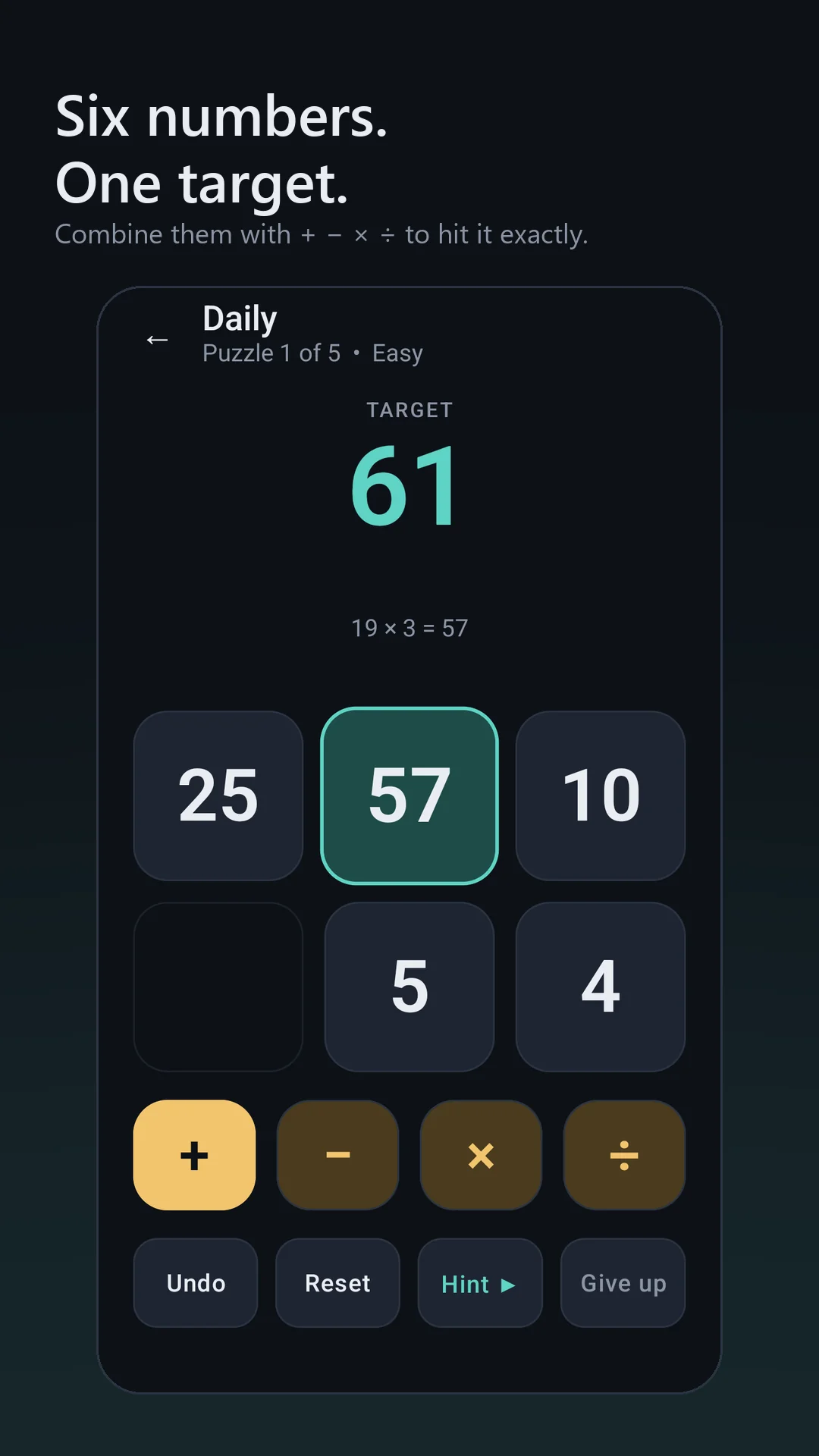
Six numbers and a target. Combine the numbers using addition, subtraction, multiplication and division to land on the target exactly. Each number can be used once, and every intermediate step has to give a whole number — no fractions, no negatives along the way. That is the entire rule set, and it is considerably harder than it sounds. If you have ever watched the numbers round on a television quiz show and thought you could do better, this is that, five times a day.
Three modes, three different games
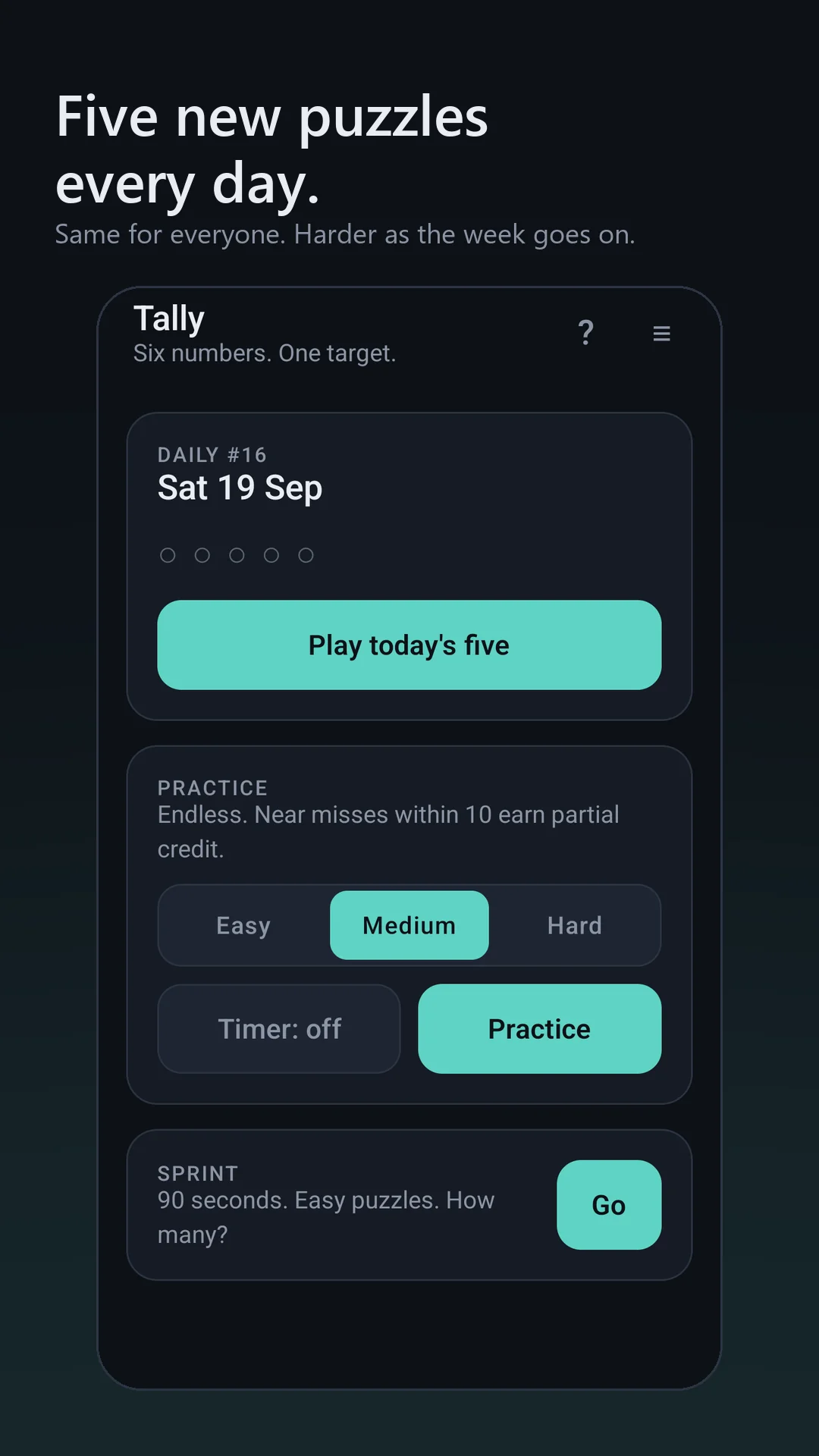
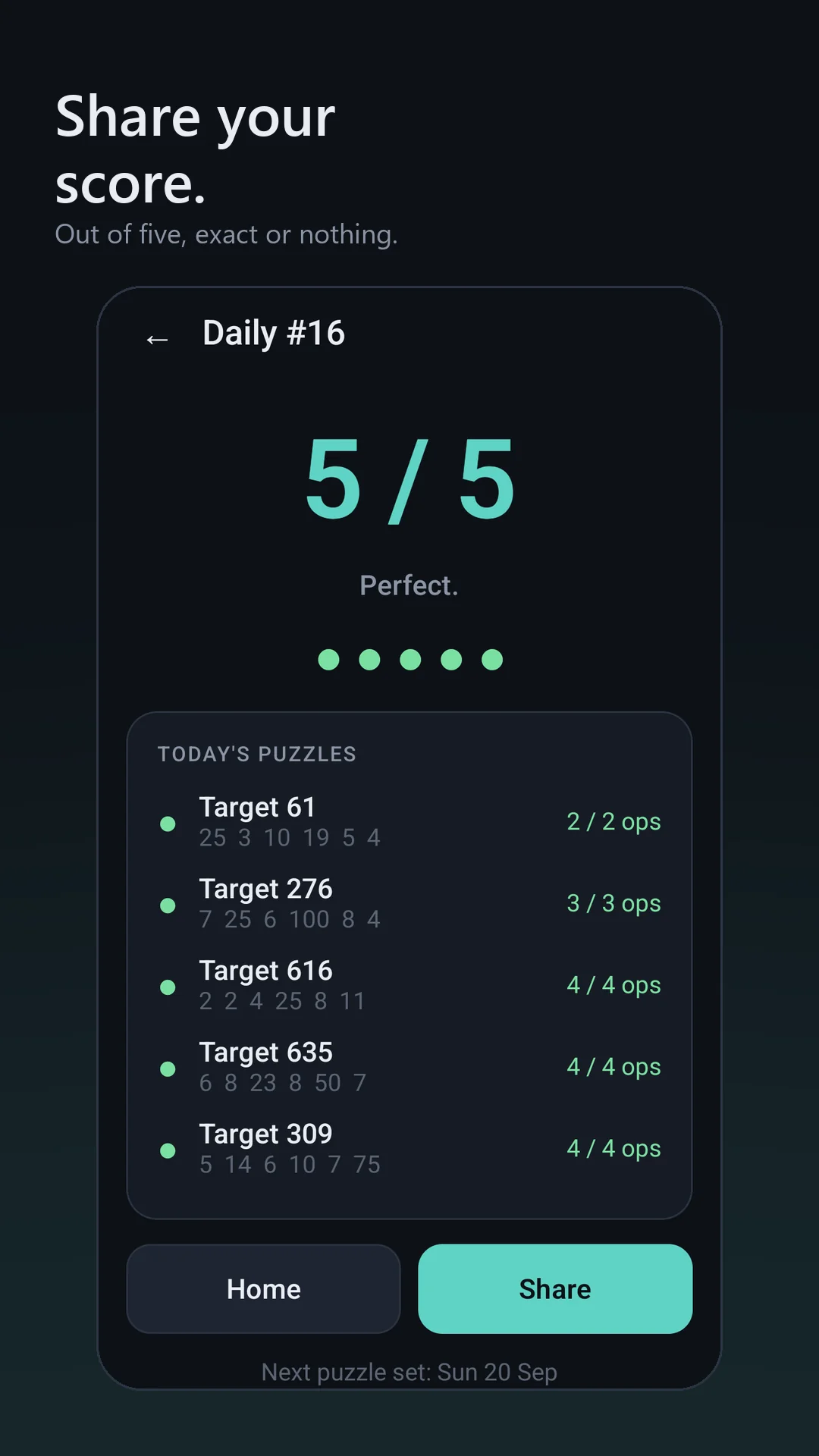
- Daily — five puzzles, the same for everyone, starting easy and getting harder through the week. Exact answers only. You finish with a score out of five.
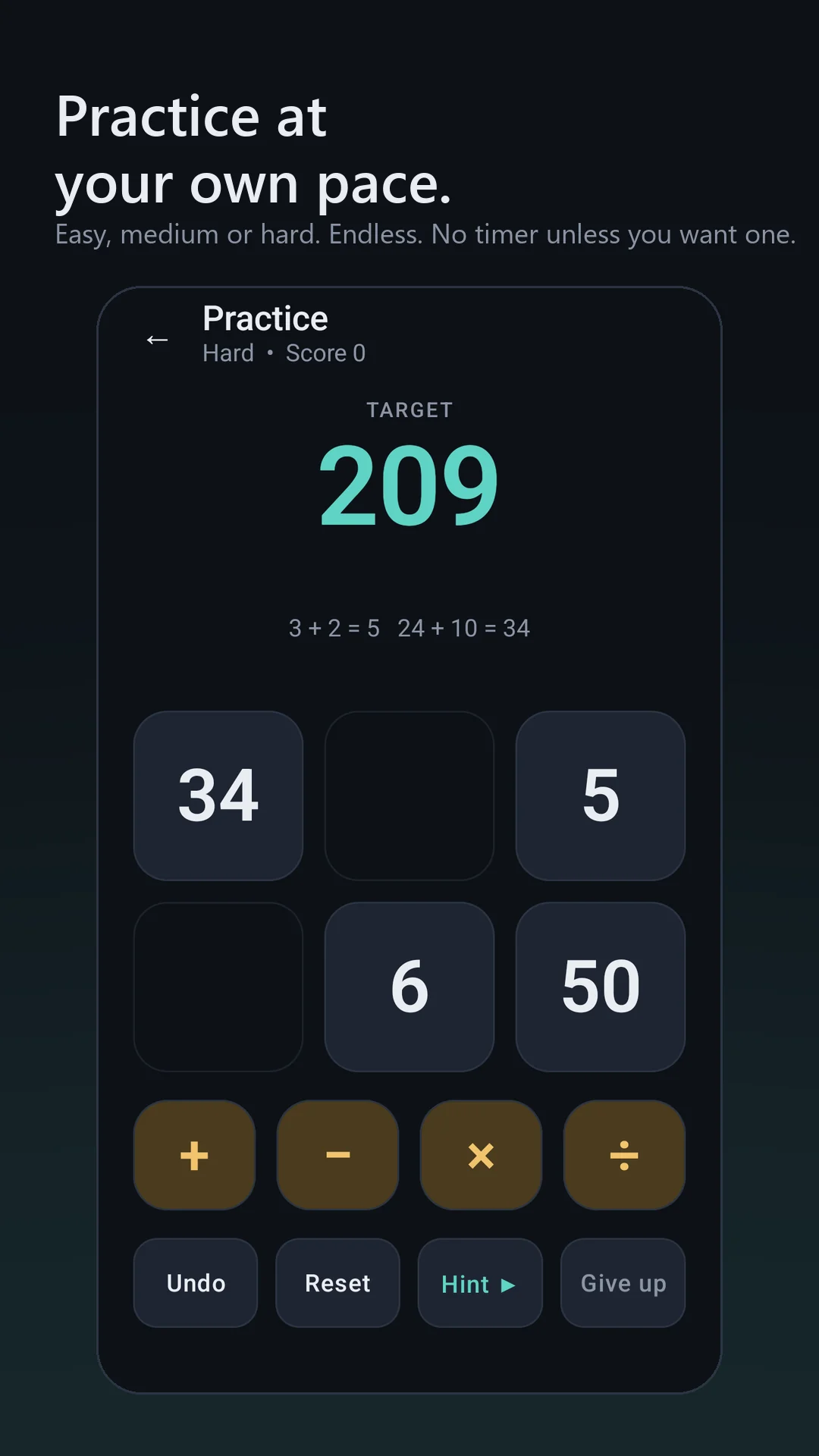
- Practice — endless puzzles at easy, medium or hard. Landing within 10 of the target earns partial credit, which makes it the mode for learning rather than proving. Untimed by default, with an optional two-minute clock when you want the pressure.
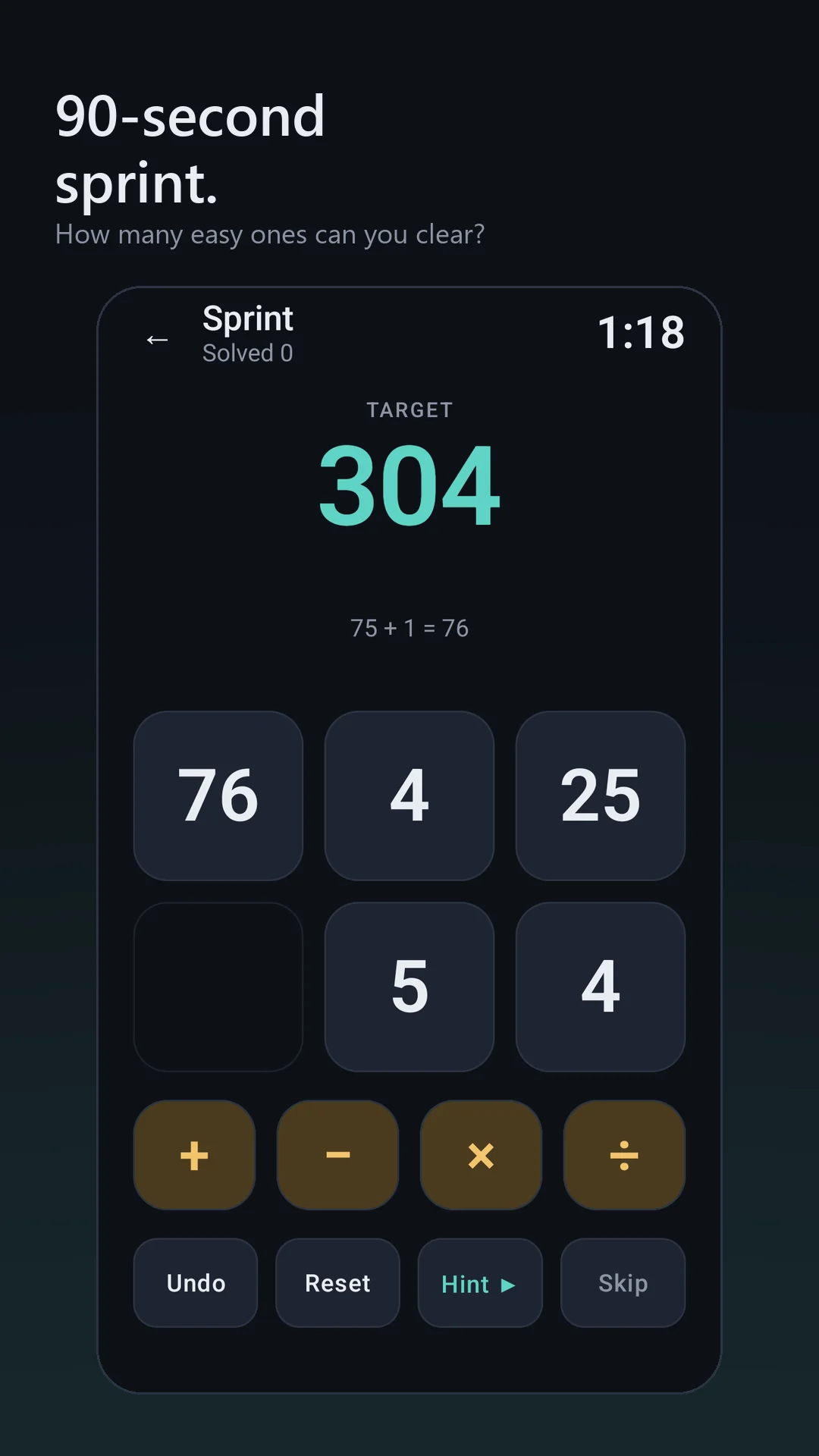
- Sprint — ninety seconds, easy puzzles, as many as you can clear. A completely different kind of thinking from the daily: pattern recognition rather than search.
What difficulty actually means here
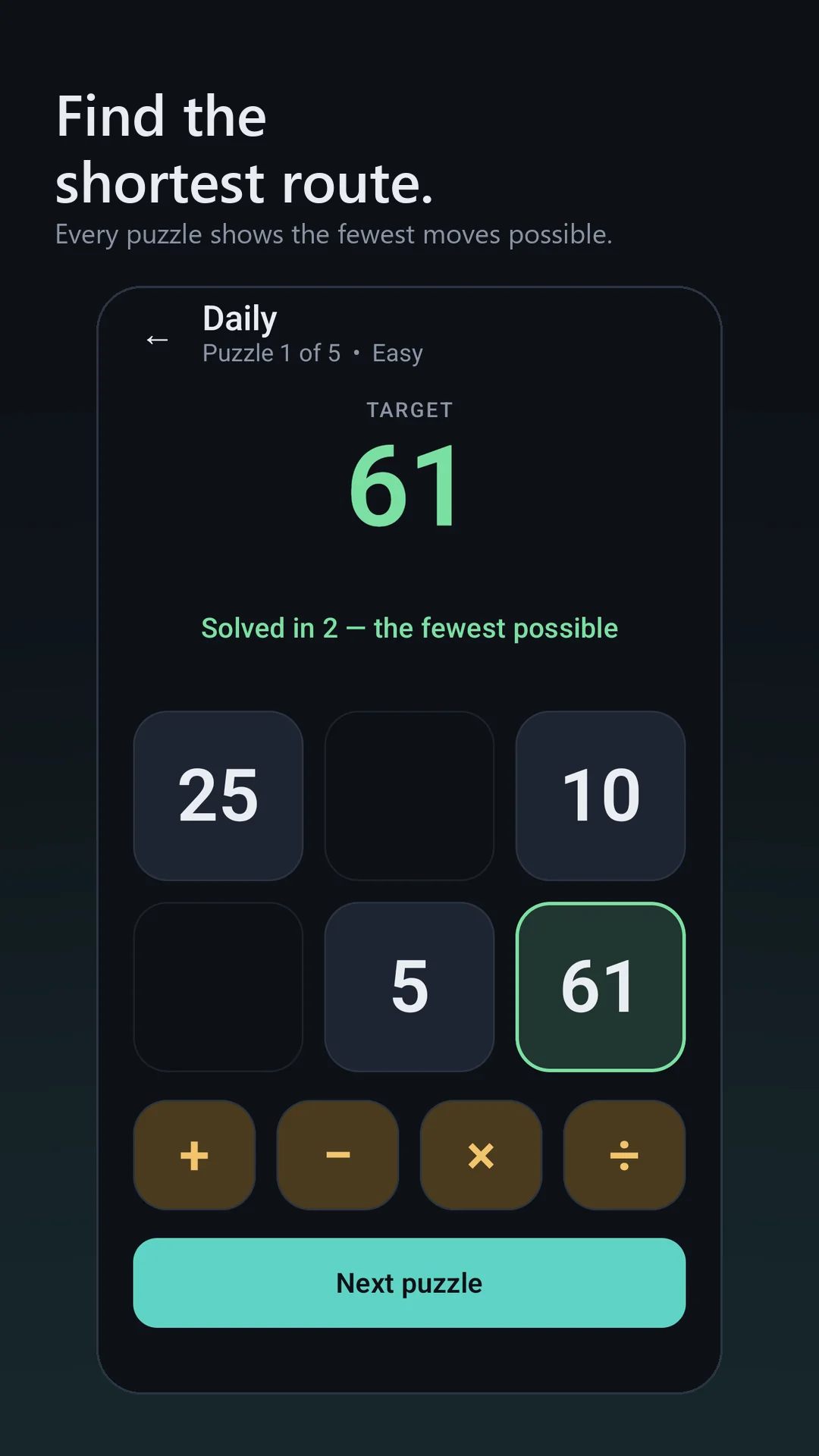
In most puzzle games difficulty is a judgement call. In Tally it is a measurement: the number of moves in the shortest solution. Easy puzzles can be solved in two operations, medium in three, hard in four or more. That is why an easy puzzle with awkward-looking numbers really is easier than a hard one with friendly ones — the rating describes the solution, not the appearance.
Every puzzle is run through an exhaustive solver before it ships, which does two things. It guarantees the target is reachable, so no puzzle is ever impossible, and it establishes the true shortest route. After you finish, the game shows you that route next to yours. Beating the target in six moves when four were available is still a win, and seeing the four is how you get better.
Working a puzzle
- Look at the target's size first. A target in the hundreds usually wants a multiplication early; a target under fifty is often addition and subtraction with one division to trim.
- Find the nearest round number. Getting to 250 when the target is 247 is most of the work — the last three often come from a small pair you deliberately kept back.
- Keep a small number in reserve. The commonest failure is using every large number early and finding yourself eleven away with nothing left to build eleven from.
- Explore freely. Undo reverses one move and reset returns all six numbers, neither carries a penalty, and nothing is timed unless you ask for it. Trying a branch to see where it goes costs you only attention.
← All games